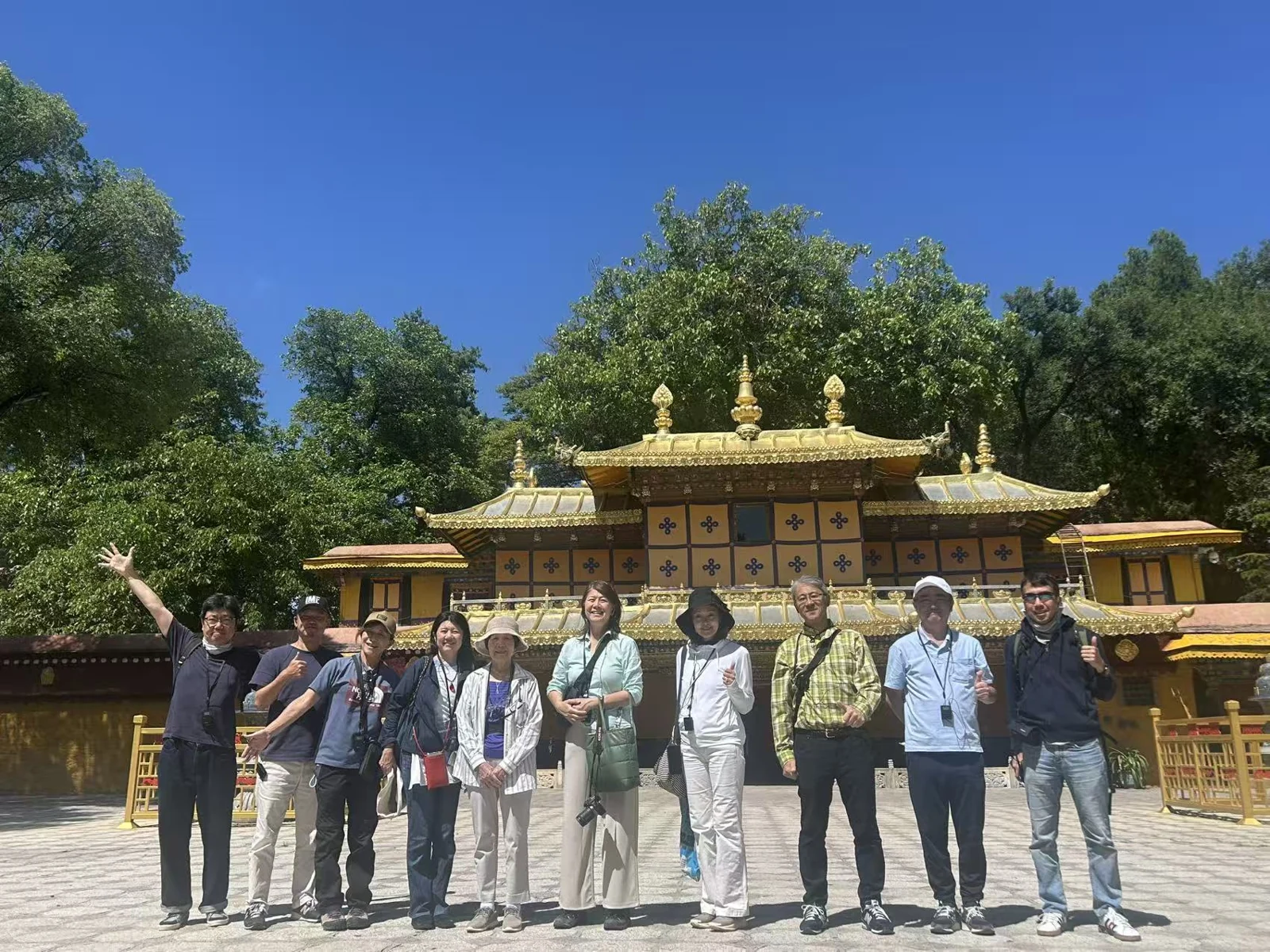
Discover history, experience culture, understand faith and meet the people who call Tibet home.
At Snowland Travel, we value the perspectives of people living in Tibet. We introduce you to its rich history, enduring culture and faith, and the rhythms of everyday life.
PEOPLE · FAITH · LIVING HERITAGE
Buddhism, culture and everyday life in Tibet & Qinghai
A monastery is more than a building: it brings together learning, worship, art and community. Explore the history and main traditions, then connect them with festivals, food, pilgrimage and sacred landscapes. Visitors of any faith can travel with curiosity and respect.
Foundations: how to approach Tibetan Buddhism
Foundations: how to approach Tibetan Buddhism
Tibetan Buddhism encompasses traditions that study and practise Buddhist teachings transmitted from India in the Tibetan language. Compassion and the Mahayana aspiration to awakening are central, alongside tantric ritual and meditation. Ethics, reasoning and everyday conduct matter as much as visible ceremonies.
The Four Noble Truths address suffering, its causes, its ending and the path. Impermanence concerns change, dependent arising concerns interdependence, and karma concerns intentional action and consequences. These ideas should not be reduced to fate or the pursuit of personal favours.
Chanting and debate are forms of learning and practice. “Lama” refers to a teacher; it is not an interchangeable title for every monk or religious role. Initiations and restricted tantric practices are distinct from ordinary visitor experiences.
A historical outline
Early transmission and translation
The imperial centuries, especially the seventh to ninth, saw Buddhist patronage, monasteries and translation. Historical accounts and religious narratives about Songtsen Gampo, Trisong Detsen, Shantarakshita and Padmasambhava illuminate this period. Samye is an important place to explore its legacy.
Later transmission and networks of learning
From the tenth century, translation and Buddhist learning expanded again in western Tibet and elsewhere. Atisha, translators and travellers studying in India helped shape distinct teaching lineages and monastic networks. Guge, Tholing and Sakya offer geographical connections to this history.
Amdo, Kham and living diversity
Amdo and Kham are cultural regions whose boundaries do not simply follow modern provinces. Qinghai monasteries, artists’ villages and pastoral communities sustain diverse traditions. Nuns, lay practitioners, craftspeople and families are also important carriers of culture.
Major schools and other living traditions
These are introductions to major traditions, not rankings. Avoid reducing them to hat colours; look instead at teaching lineages and local history.
Nyingma
རྙིང་མ།
The “ancient” tradition values early translations and the legacy of Padmasambhava, including Dzogchen and treasure teachings. Mindrolling and Dorje Drak provide introductions to its monastic culture.
Kagyu
བཀའ་བརྒྱུད།
Lineages associated with Marpa, Milarepa and Gampopa developed branches including Karma, Drigung, Drukpa and Taklung. Mahamudra is prominent. Tsurphu and Drigung Til are regional examples.
Sakya
ས་སྐྱ།
Developing around the Khon family and Sakya monastery, this tradition emphasises Lamdre, the path and its result. Branches include Ngor and Tsar. Sakya and Gongkar Chode offer connections to its learning and artistic heritage.
Gelug
དགེ་ལུགས།
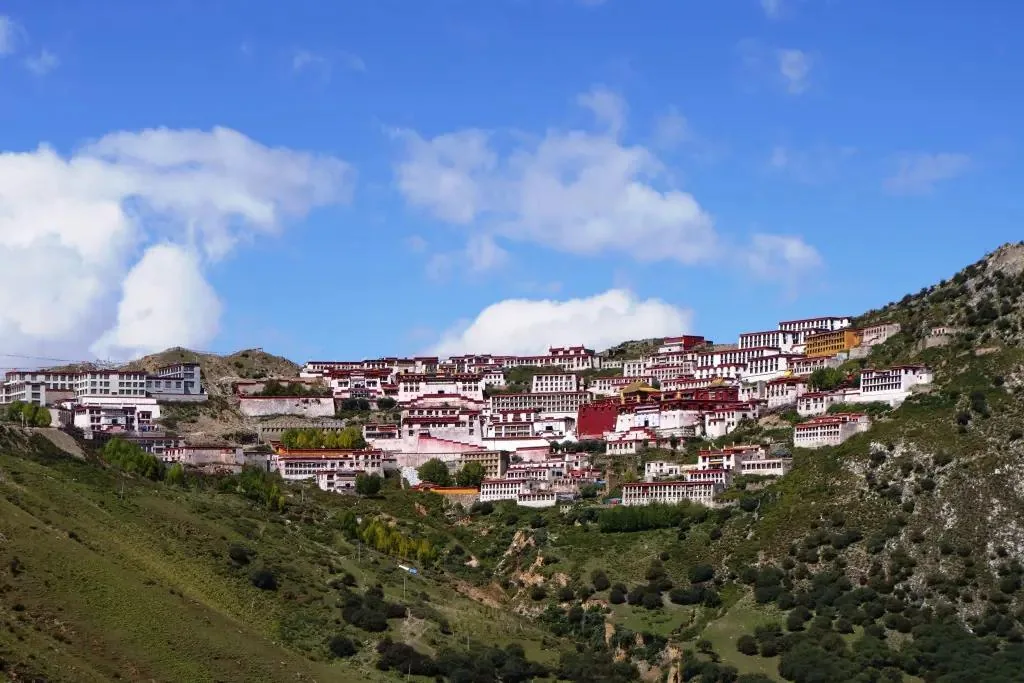
Tracing its origins to Tsongkhapa, Gelug values study, discipline, graduated-path teachings and practice. Ganden, Drepung, Sera, Tashilhunpo and Kumbum are important centres; debate trains reasoning and understanding.
Jonang
Known for Kalachakra teachings and zhentong philosophy, Jonang survived in Amdo. It illustrates why Tibetan Buddhism cannot be exhausted by a list of four schools.
Kadam and Shangpa Kagyu
Kadam, associated with Atisha, transmitted mind training and graduated-path teachings into later traditions. Shangpa Kagyu, linked with Khyungpo Neljor and Niguma, is distinct from Marpa Kagyu.
Bon and exchange across traditions
Bon has independent doctrines and institutions and should not simply be labelled a Buddhist school. Non-sectarian approaches such as Rime also encourage respect and learning across traditions. Local culture is not defined by one lineage alone.
Monasteries across Tibet & Qinghai
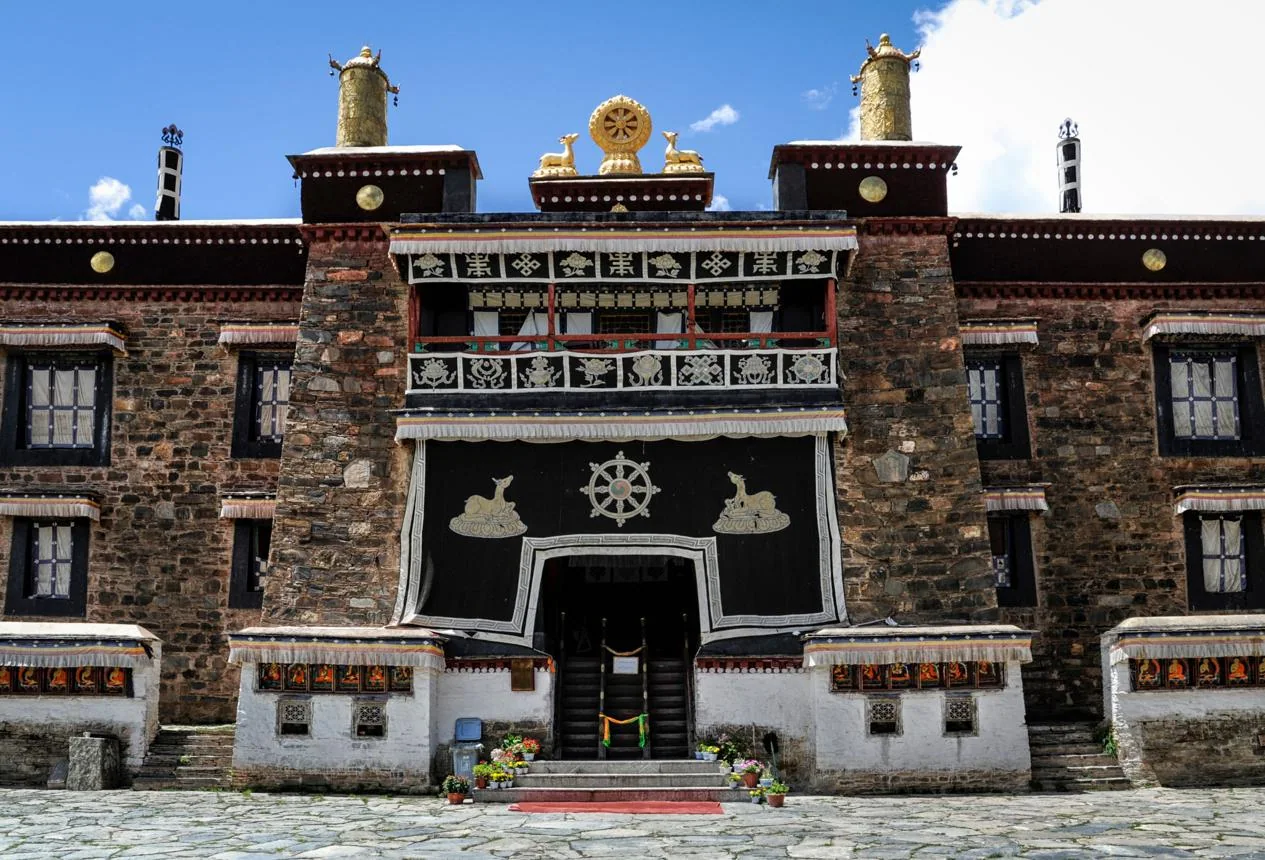
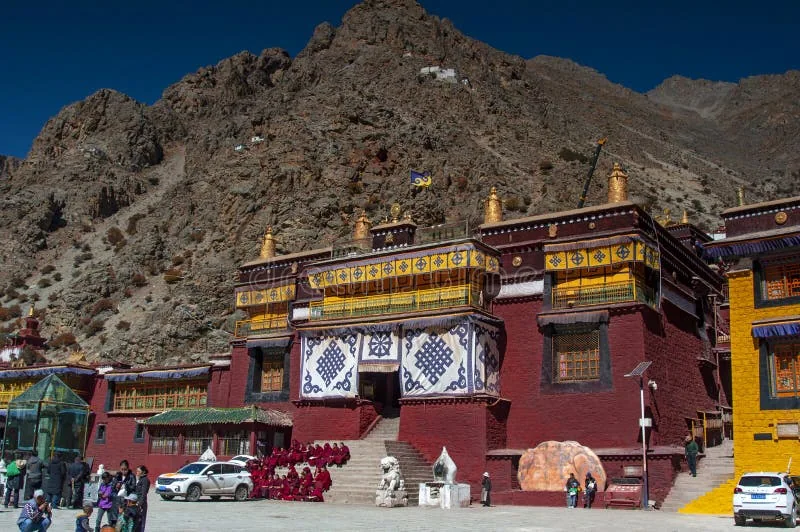
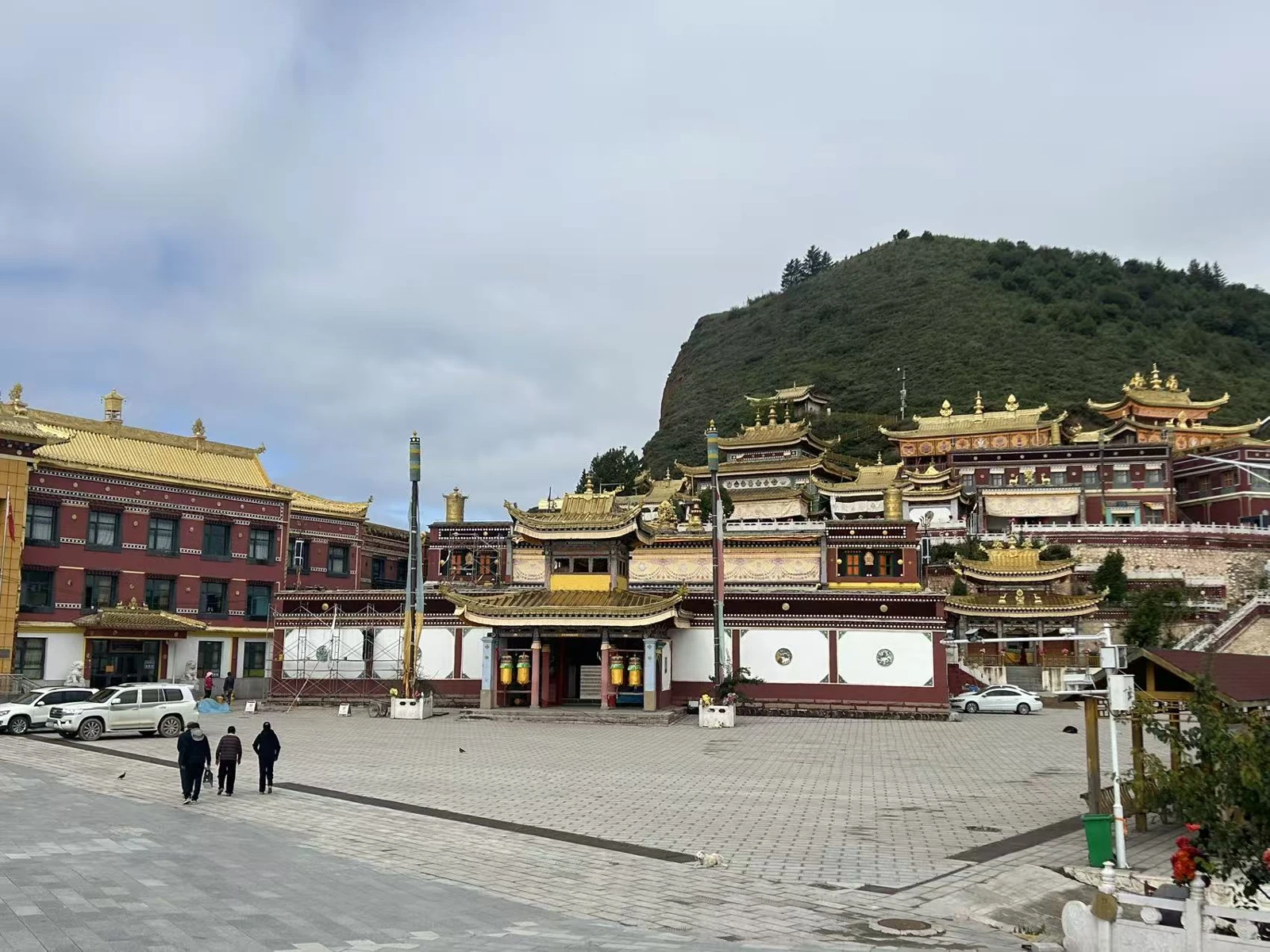
Monasteries remain places of worship and learning. Combine visits regionally and connect their history, architecture and living practices. Check opening, photography and foreign-visitor access before travel.
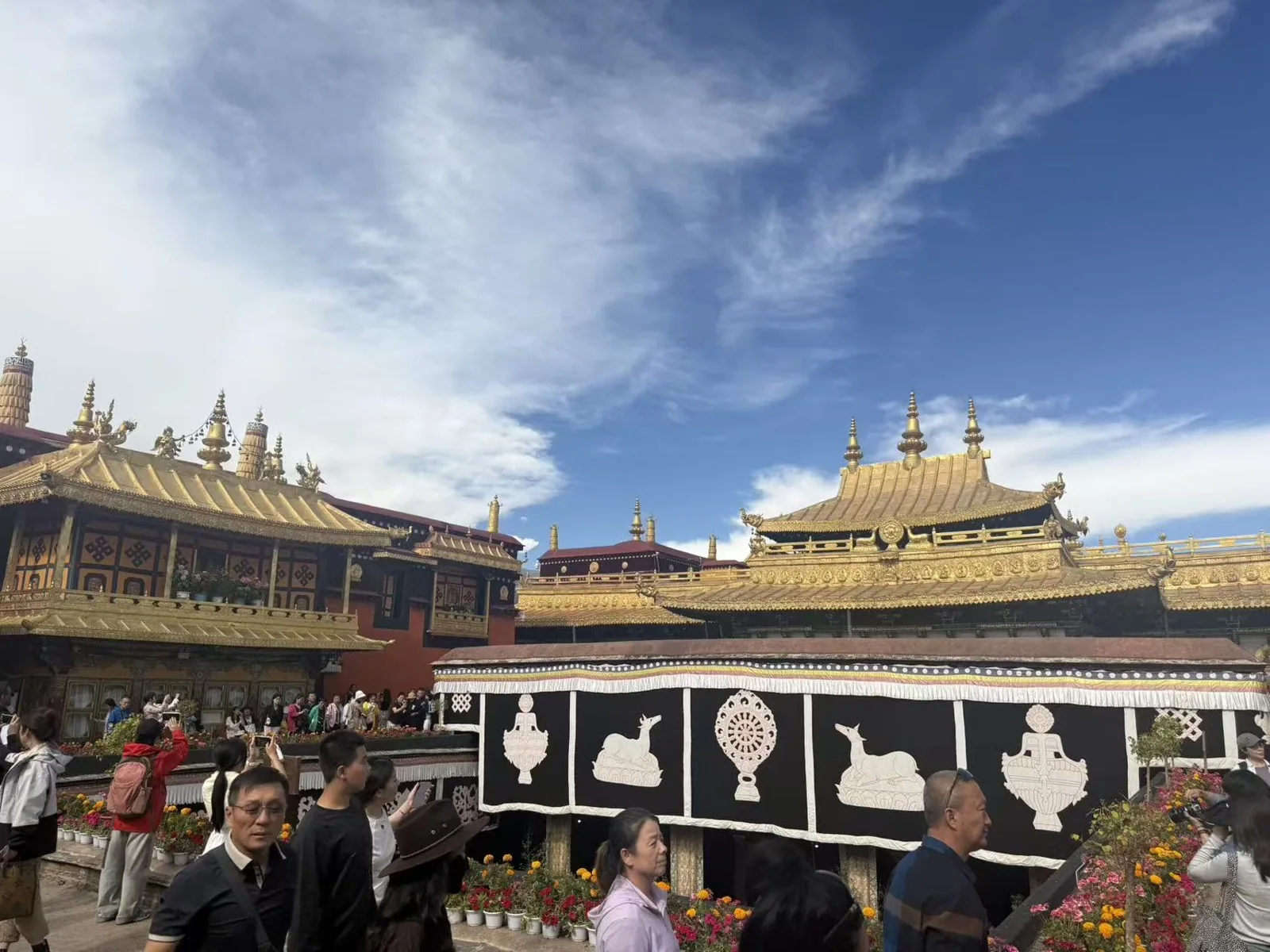
Lhasa: Jokhang & Barkhor
Connect Jokhang worship with the Barkhor circuit, then explore the different roles of the Potala, Drepung and Sera.
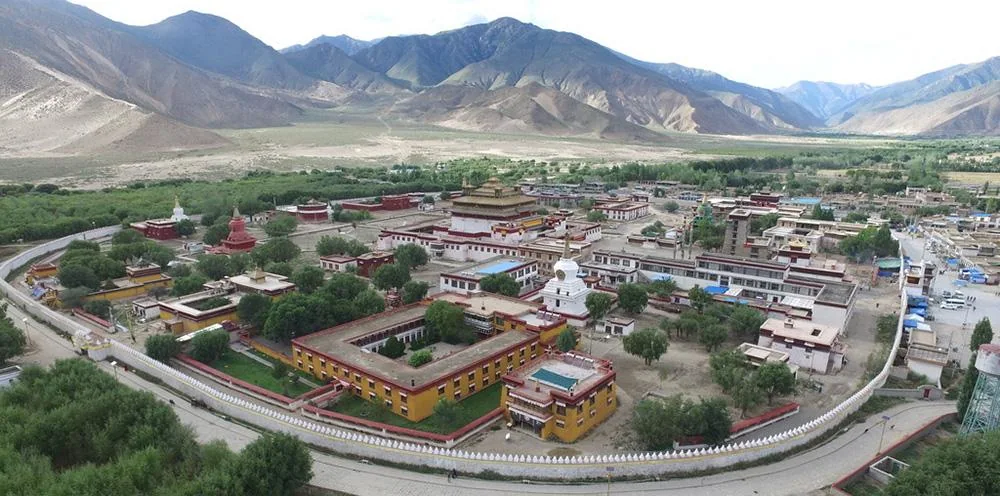
Samye introduces early Buddhist history; Mindrolling and Dorje Drak connect with Nyingma heritage. Gongkar Chode adds another perspective within the same region.
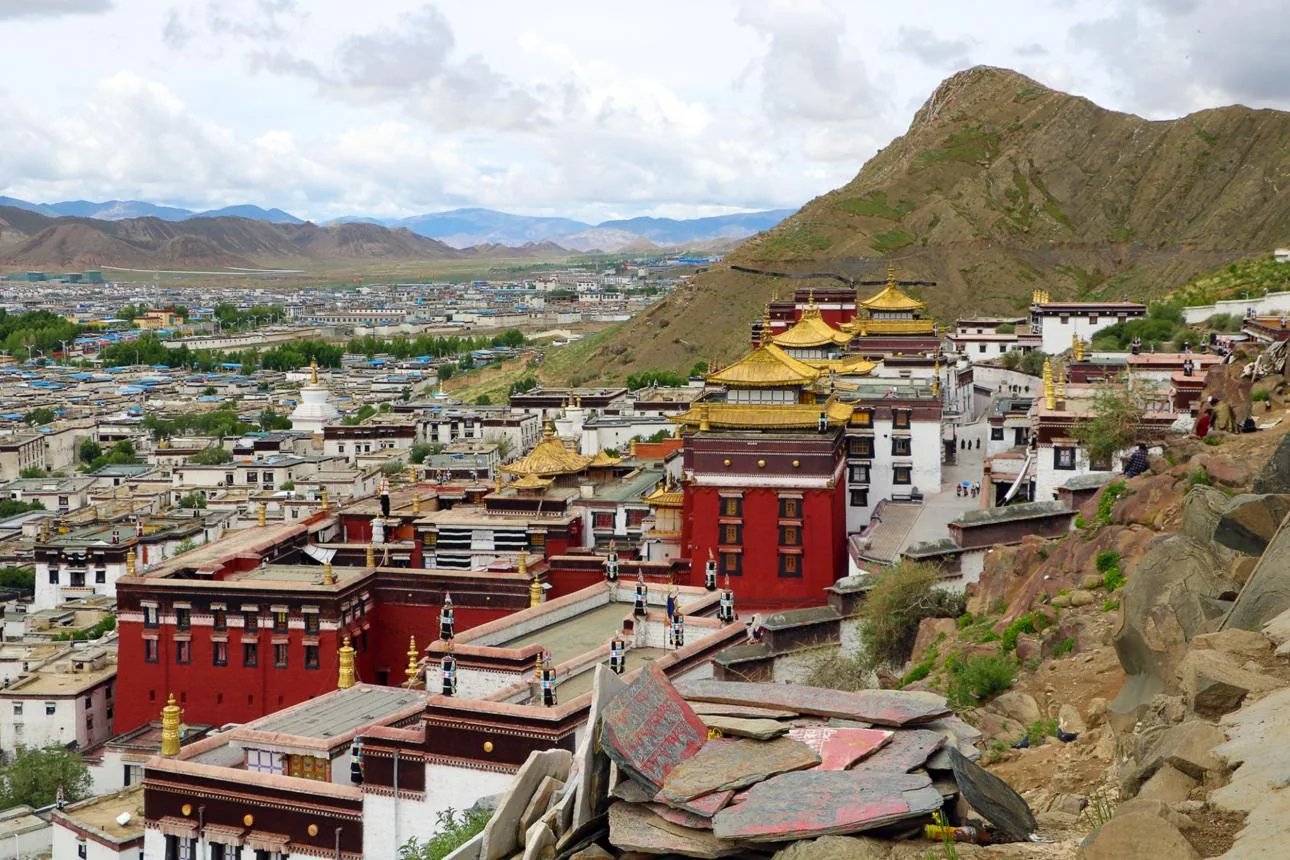
Link Tashilhunpo, Sakya and Shalu to explore Tsang’s varied religious and artistic heritage. Pelkor Chode and the Kumbum at Gyantse add major architectural and visual traditions.
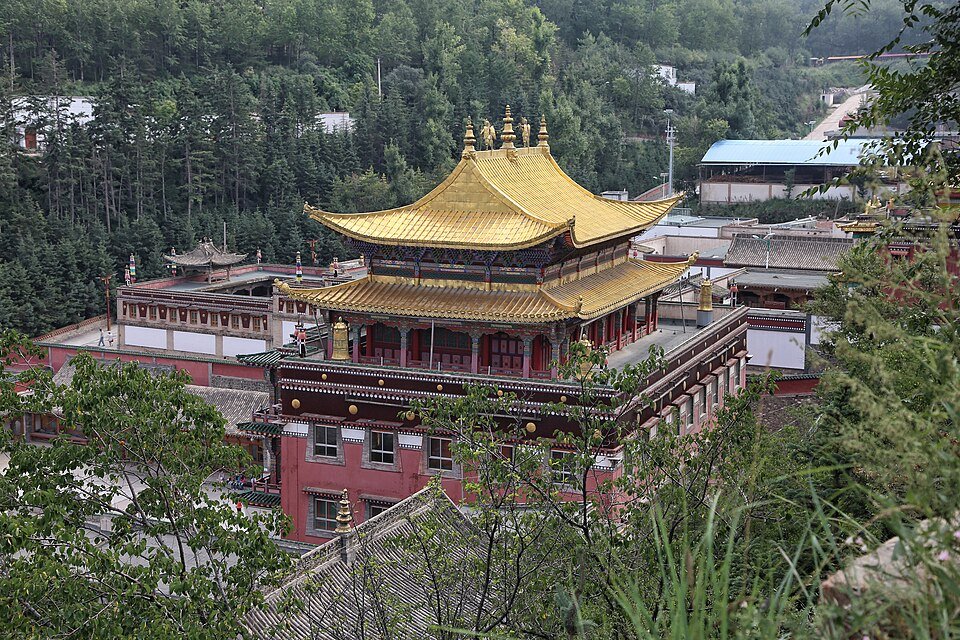
A major introduction to Tibetan monastic culture near Xining. Explore decorated halls, worship and monastic life with guidance; displays and ceremonies vary by date.
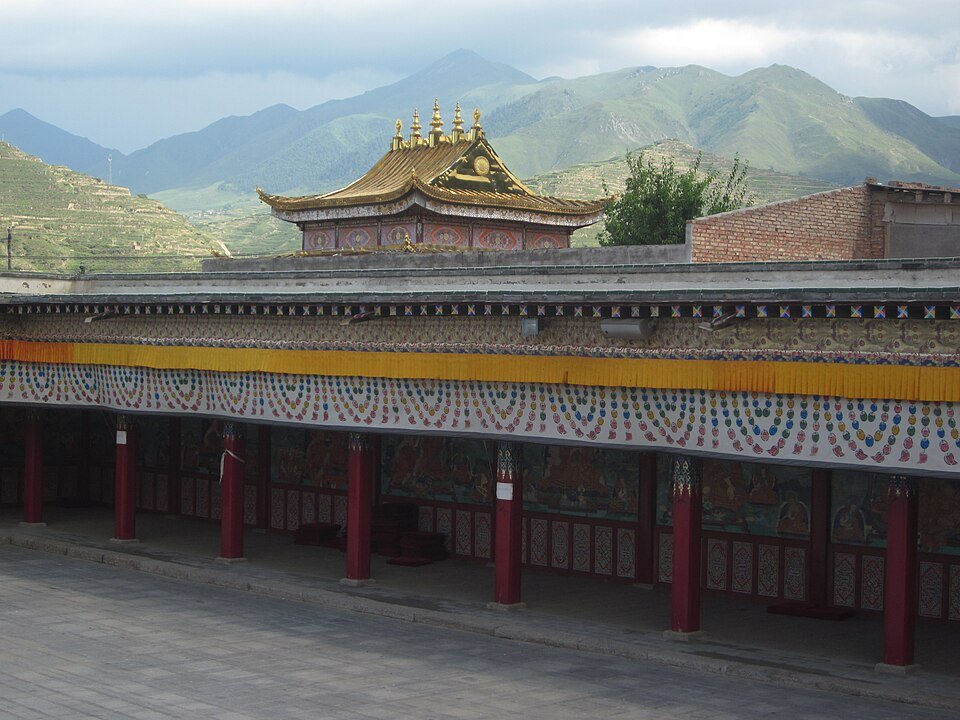
Connect Rongwo with surrounding artists’ villages to explore Buddhist art shared between monasteries and workshops. Look beyond thangkas to murals, sculpture and textiles; arrange workshop access in advance.
Shachung in Hualong County, Haidong, connects monastic heritage with surrounding communities. Journeys towards Yushu or Golog require attention to altitude and distances as well as religious diversity.
Thangkas are devotional scroll paintings of enlightened figures, teachers and teachings. Their imagery is purposeful, not simply decorative. Regong arts include painting, sculpture and textile work sustained in monasteries and villages.
Mandalas & wrathful imagery
Mandalas present an ordered sacred world. Fierce faces do not simply mean evil: wrathful imagery can express the force that removes obstacles. Identifications depend on attributes and context rather than appearance alone.
Viewing with care
Do not touch murals or statues; follow photography rules. Ask before photographing artists or unfinished work. Check materials, production and export conditions before purchasing, especially for old religious objects.
Festivals, cham & Tibetan opera
Festivals, cham & Tibetan opera
Cham and opera are distinct
Cham is masked dance within monastic ritual, varying by tradition and monastery. Ache Lhamo, Tibetan opera, combines singing, movement and storytelling. They are distinct forms, not automatically tourist performances.
Losar, Saga Dawa & Shoton
Losar marks the new year; Saga Dawa is a sacred month associated with the Buddha; Shoton is a major Lhasa festival. Prayer gatherings, butter sculpture and thangka displays vary locally. Verify calendars and local announcements rather than assuming fixed Gregorian dates.
Respect space and worship
Keep paths and worship lines clear, do not touch ritual implements and follow organisers’ instructions. Do not interrupt participants or cross barriers for photographs. Dates and visitor access can change.
Food, hospitality & everyday life
Food, hospitality & everyday life
Tsampa, tea, momo & thukpa
Tsampa is flour from roasted grain, often eaten with butter tea. Momo are dumplings; thukpa refers to noodle or soup dishes. Butter tea, sweet tea and dairy foods vary across communities, reflecting pastoral life, farming and urban exchange.
Faith does not mean identical diets
Not every Buddhist is vegetarian; choices differ by person and community. Qinghai also has other culinary traditions. Respect rules in halal establishments and avoid treating an entire people as having one uniform diet.
Visits, hospitality & dietary preparation
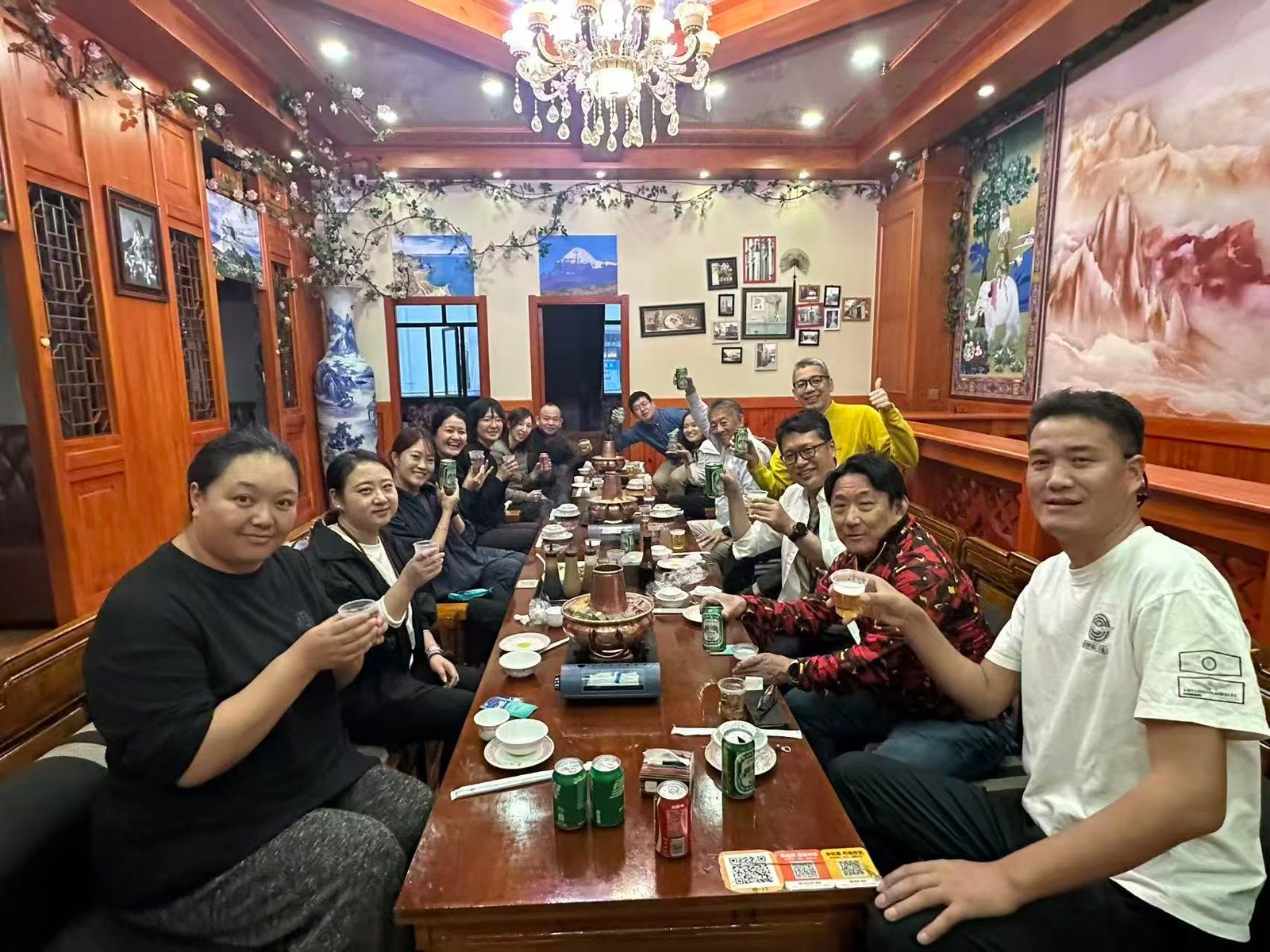
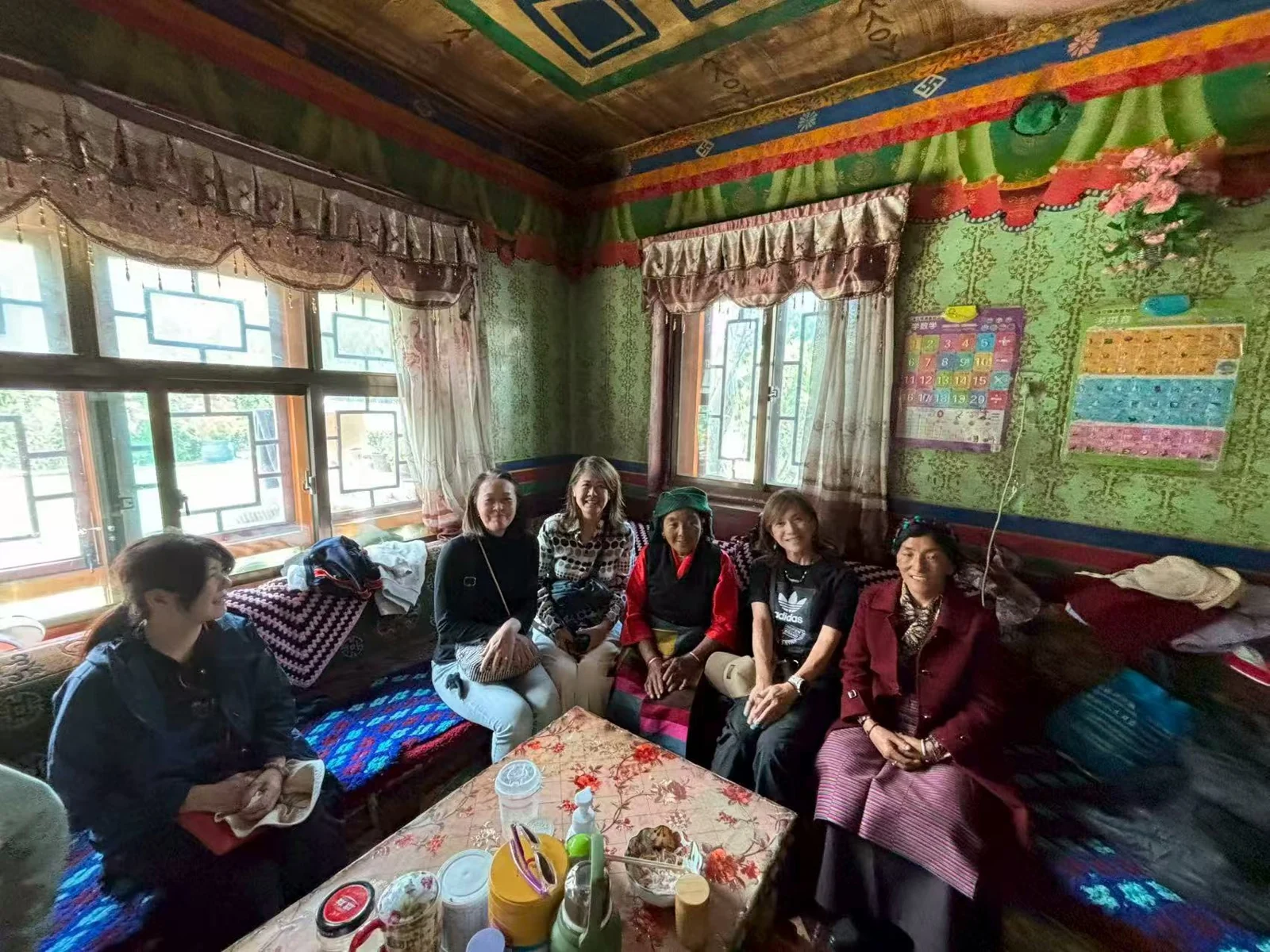
Home visits require the host’s agreement; ask before taking photographs. You need not eat or drink alcohol against your wishes. Discuss vegetarian needs and dairy, wheat or other allergies in advance, including remote-area limitations.
Walking, kora & pilgrimage
Walking, kora & pilgrimage
Kora is devotional circumambulation around a monastery or sacred place, with purposes that differ from recreational hiking. Follow the local tradition’s direction and give space to pilgrims making prostrations.
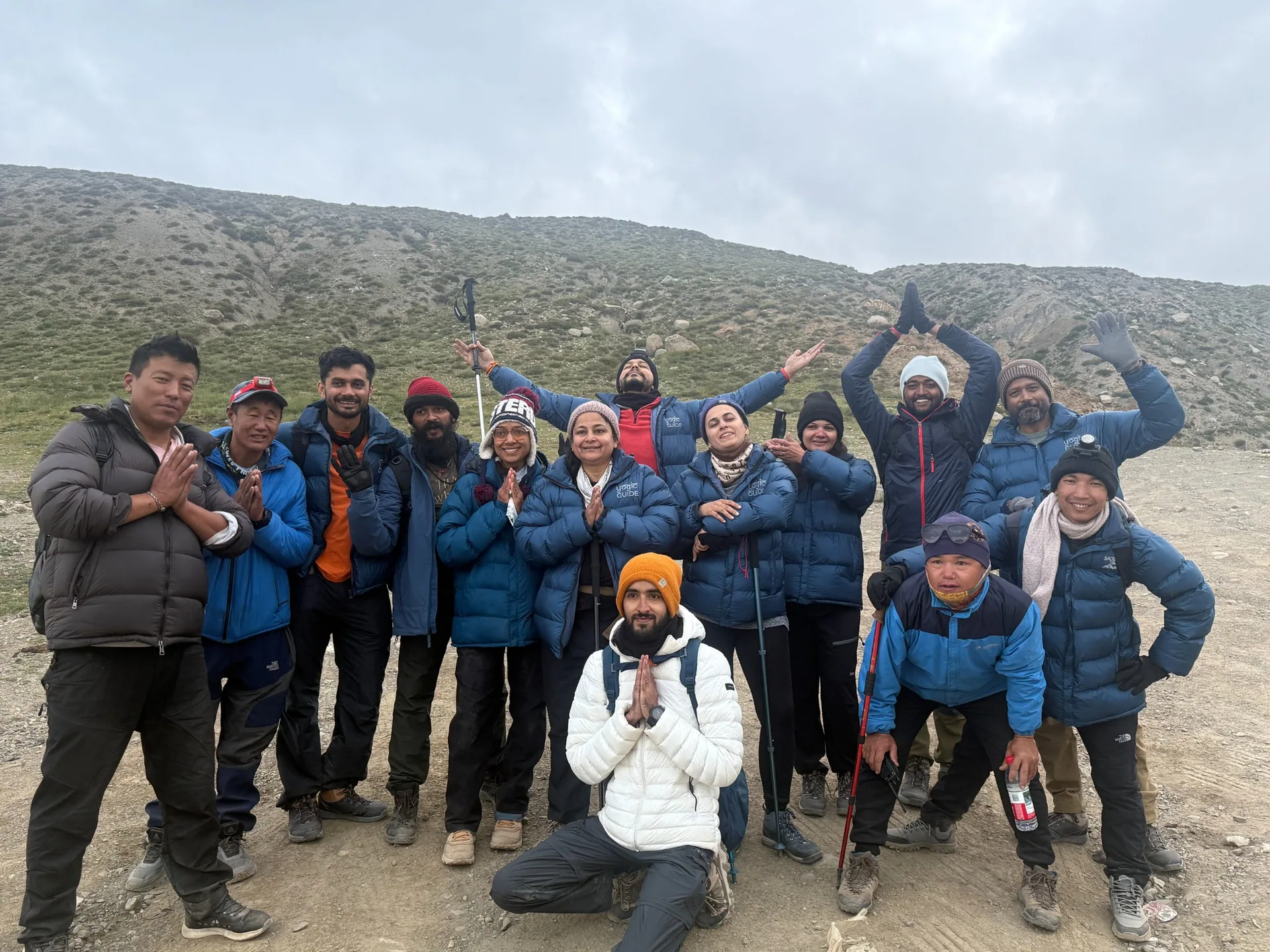
A short Lhasa walk, a Qinghai grassland outing and the Kailash kora have very different elevations, distances and facilities. Review walking days, passes, baggage arrangements and withdrawal plans, putting health first.
Sacred mountains, lakes & respect for place
Sacred mountains, lakes & respect for place
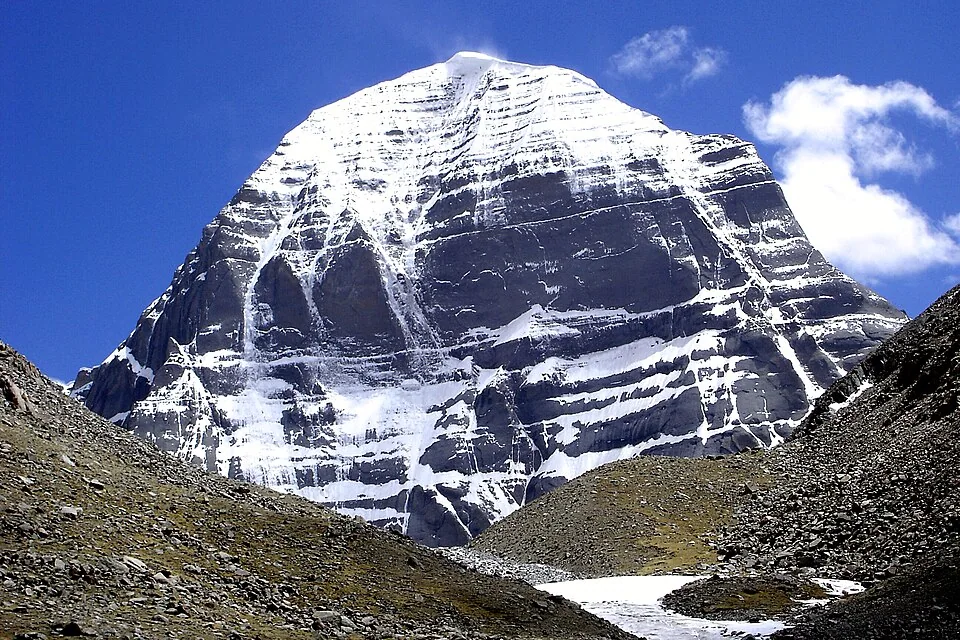
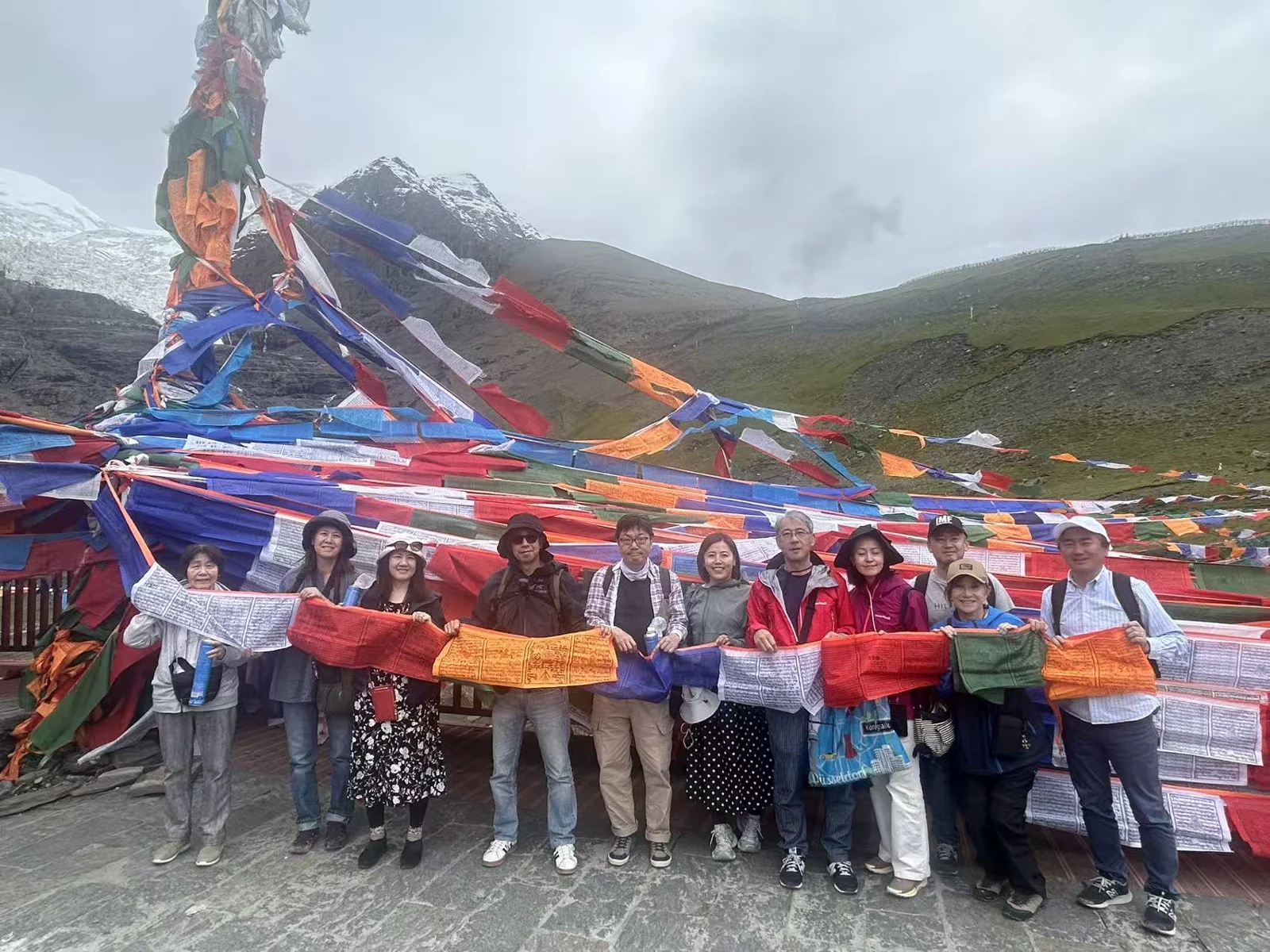
The Kailash–Manasarovar region carries meaning in Tibetan Buddhism, Bon, Hinduism and Jainism. Qinghai’s mountains and lakes have local sacred associations too. Approach them as lived landscapes of memory, not merely photographic backdrops.
Do not enter lakes, move stones or prayer flags, or touch offerings without checking local rules. Respect grazing land and wildlife and remove litter. Sacred significance does not grant access: closed areas remain closed.