Discover history, experience culture, understand faith and meet the people who call Tibet home.
At Snowland Travel, we value the perspectives of people living in Tibet. We introduce you to its rich history, enduring culture and faith, and the rhythms of everyday life.
Journey through Sichuan’s Tibetan Cultural Region | Monasteries, snowy mountains and villages of Kham and Amdo
Prayer paths beneath snowy peaks, grassland towns and lakes embraced by forests. We introduce Sichuan’s Tibetan cultural regions area by area, focusing on Garzê and Aba. With a Tibetan perspective, discover the history and daily life beyond the scenery.
Kangding, Danba & the foothills of Gongga
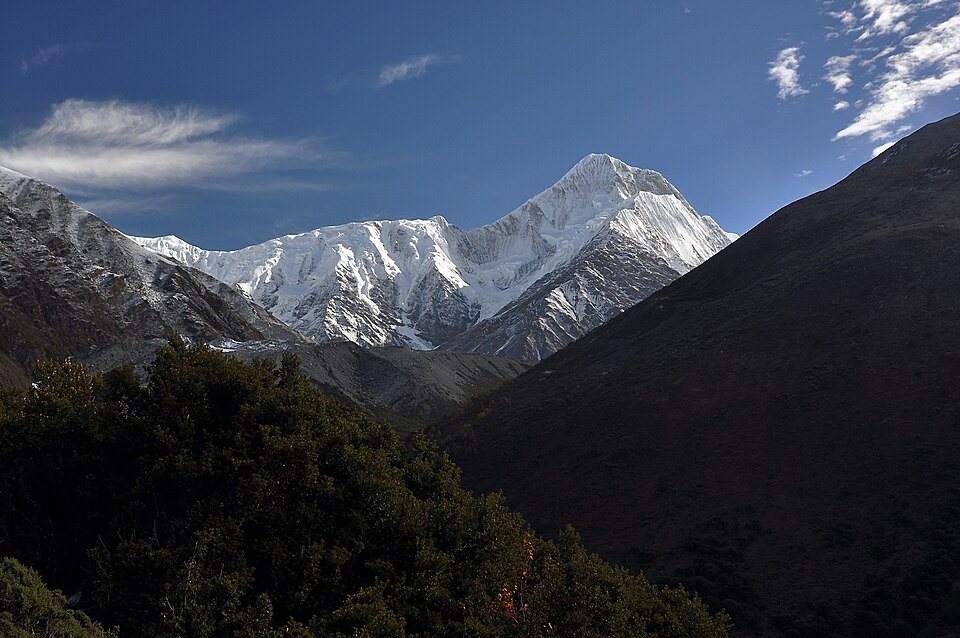
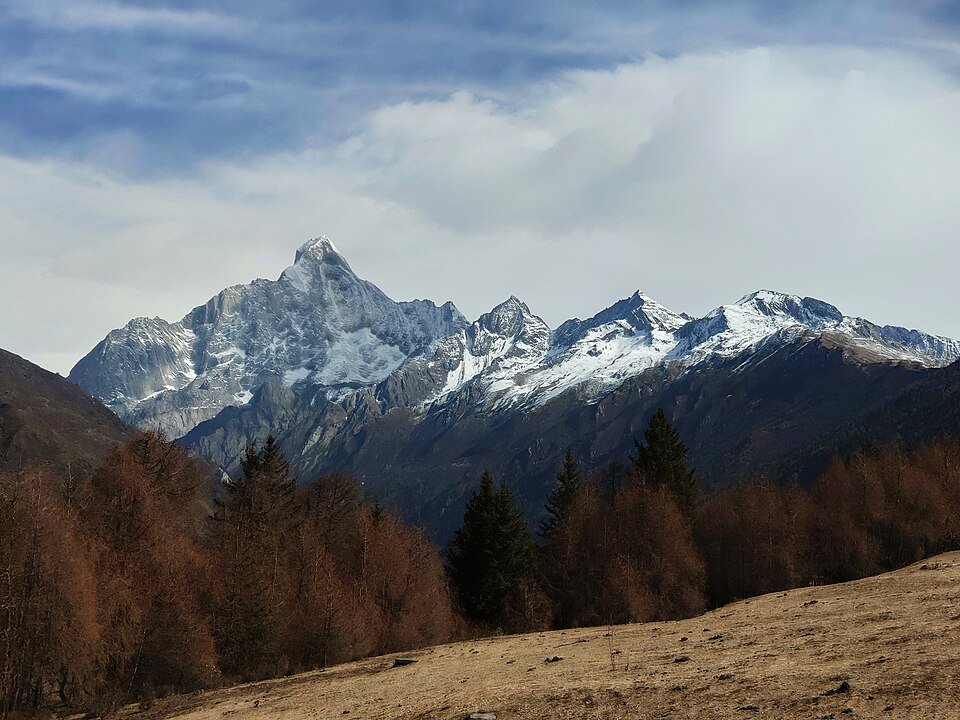
Mount Gongga (Minya Konka)
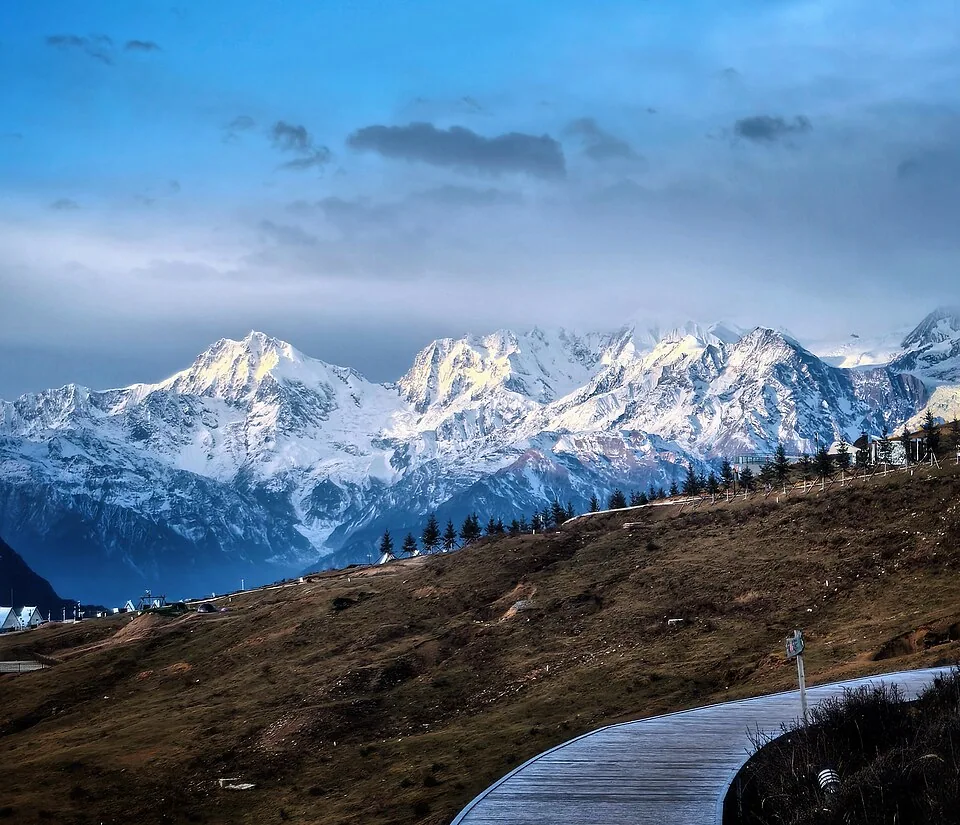
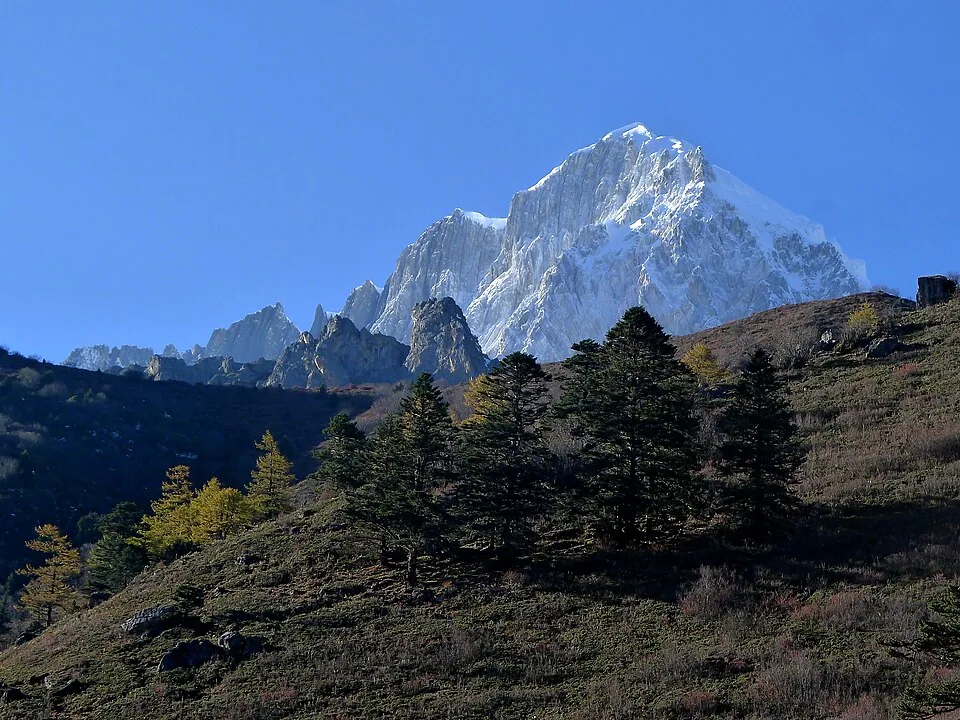
Minya Konka, one of Sichuan’s defining high peaks, rises white beyond layered ridgelines, conveying the grandeur of Kham’s nature. Forests, pastures and Tibetan villages spread across its foothills, linking snowy mountains with everyday life.
The mountain’s profile varies with the viewpoint. Considering cloud movement and travel distances, we combine time for photography with time simply to contemplate the mountain. Climbing and long-distance trekking are planned separately from ordinary viewing trips.
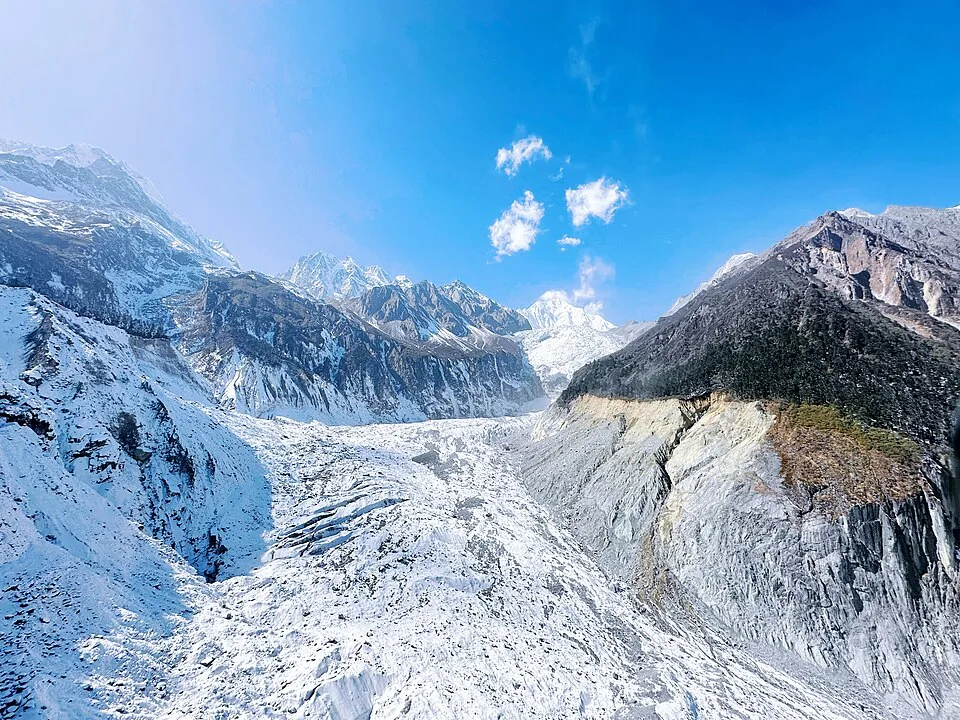
海螺溝Hailuogou Glacier Forest Park
On Gongga’s eastern slopes, this scenic area combines glaciers and forests. The contrast between green valleys and snow and ice is striking; together with Moxi town, it offers an introduction to the nature of the foothills.
Within the scenic area, we follow transport options and visitor access available that day. Glacier views change with snow cover and weather, so we enjoy the viewpoints with care for footing and temperature.
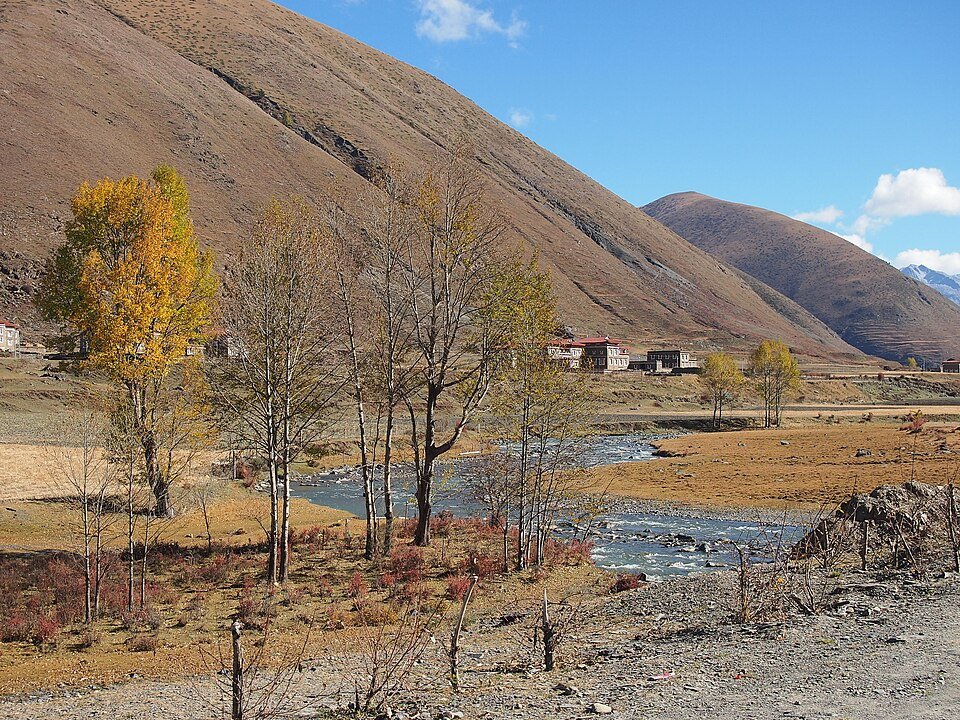
XinduqiaoXinduqiao
Streams wind through grassland beside stone houses, with mountains behind. Xinduqiao is a plateau town where morning and evening light gives depth to the scenery. Beyond autumn colors, summer greens and clear winter skies each have their own appeal.
Even when photographing from the roadside, houses and fields are part of people’s lives. We choose appropriate stopping places with the local guide and check people’s wishes before photographing them or private property.
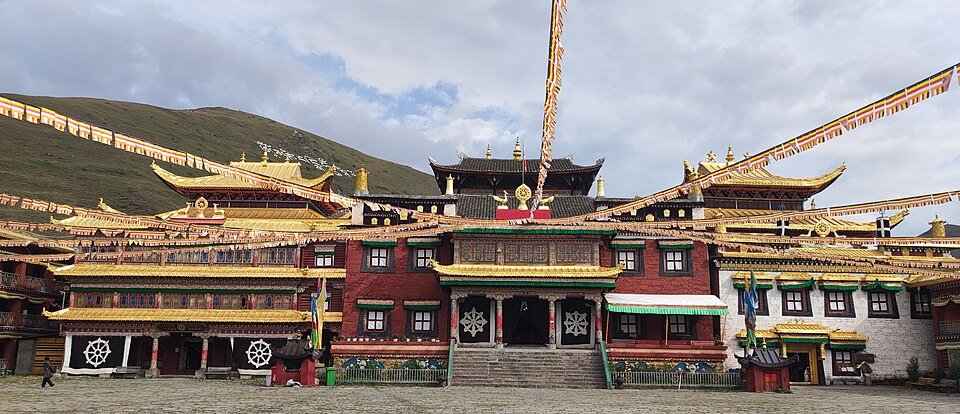
Tagong Monastery & Grassland
Tagong Monastery is the center of prayer in a grassland town. The colors of its halls, pilgrims’ footsteps and distant mountain ranges convey the connection between faith and nature in Kham.
We check hall access and photography rules at the monastery. Combining the visit with nearby grassland walks, we attend to the community’s continuing prayers as well as its buildings.
Danba Tibetan Villages
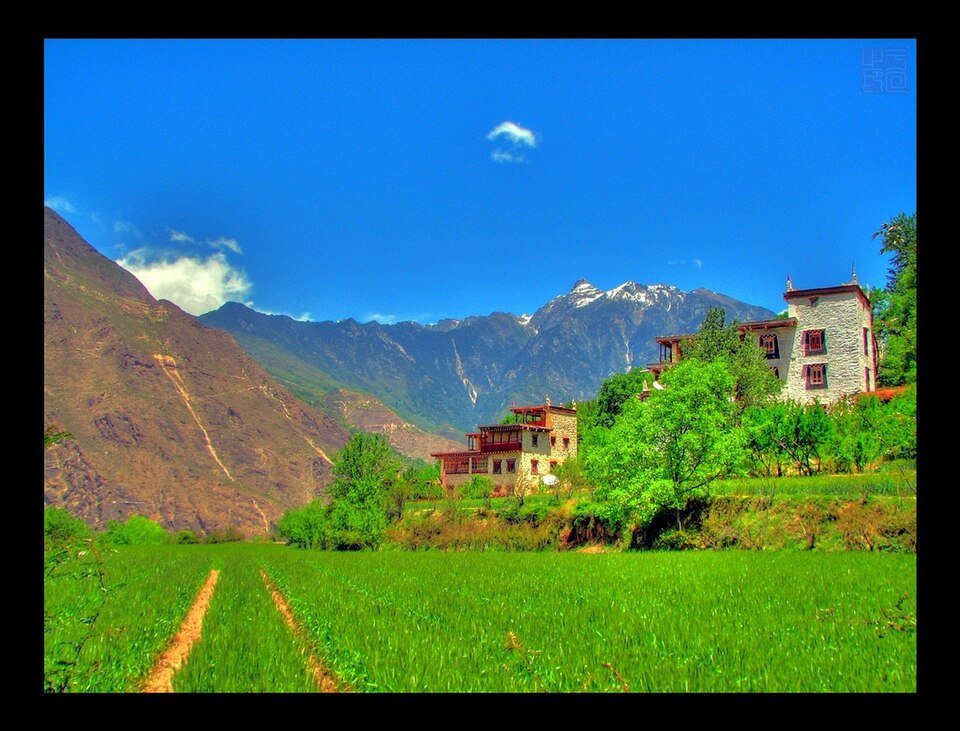
White houses dot Danba’s mountain slopes. In villages where Gyalrong Tibetan culture thrives, stone architecture, fields, fruit trees and mountains form a single landscape. Differences between villages such as Jiaju and Zhonglu are part of the appeal.
We respect residents’ daily lives when walking through villages and confirm acceptance before entering homes. The photographs show village scenery in the Danba region; not every village has the same appearance.
牛背山Niubei Mountain
A mountain scenic area in western Sichuan with high viewpoints overlooking mountains and seas of cloud. When clouds fill the valleys, ridges appear like islands in an ocean, creating a different depth from clear-weather views.
Seas of cloud and glowing dawn skies depend on the weather. We check traffic restrictions, mountaintop facilities and cold conditions, combining the visit comfortably with Kangding or Gongga’s foothills.
Litang, Daocheng & southern Kham
Litang Monastery (Changqingchun Ke’er Monastery)
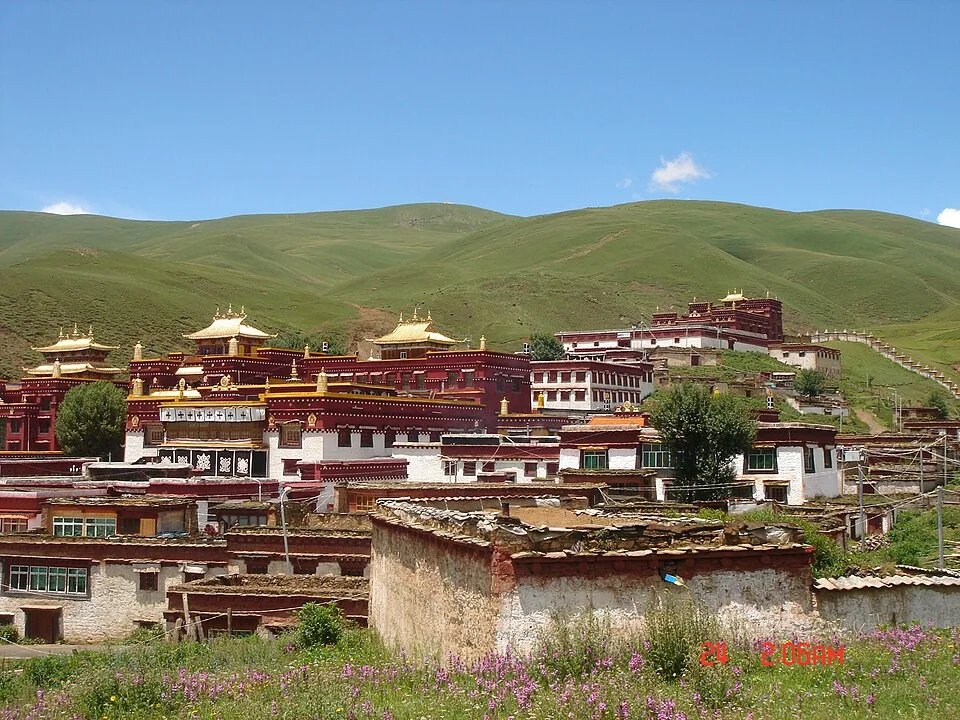
A great monastery overlooking Litang, its golden roofs and white halls stand out against the plateau sky. An important place for discovering Kham’s Buddhist culture, it invites attention to the relationship between town and monastery as well as the buildings’ extent.
Visits do not interfere with religious activities. As the town lies at high altitude, we allow breaks and avoid rushing up long stairways immediately after arrival.
Litang Old Town & Maoya Grassland
Litang combines old streets with the openness of the plateau. Encounters with life in town lanes, and time among pastoral scenes and vast skies outside town, create memories different from monastery visits.
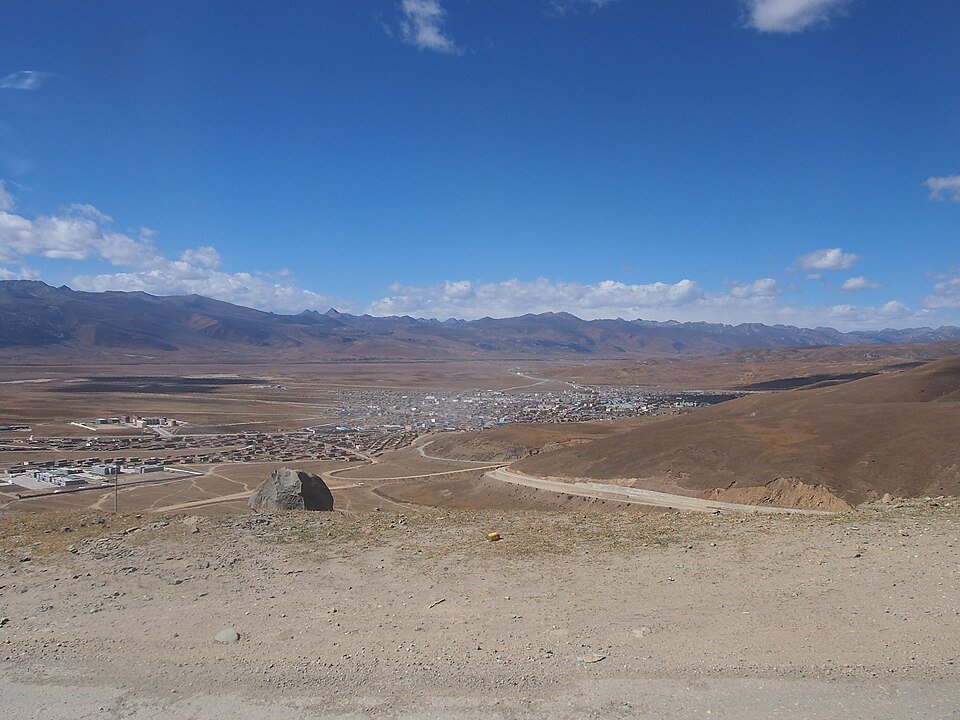
The photograph shows Litang town. Grassland flowers and greenery vary by season, and we follow local guidance when entering pasture. Town walks also begin with short distances suited to your condition.
Ge’nyen Massif
A mountain region southwest of Litang, where snowy peaks, grasslands and valleys overlap. The peaks are deeply tied to local faith, best viewed with the land’s stories rather than simply as photographic subjects.
For visits around Lenggu Monastery and elsewhere, we check roads and visitor acceptance. Without assuming long walks or deep mountain access, we suggest viewpoints suited to your trip length and physical condition.
Daocheng Plateau Landscapes
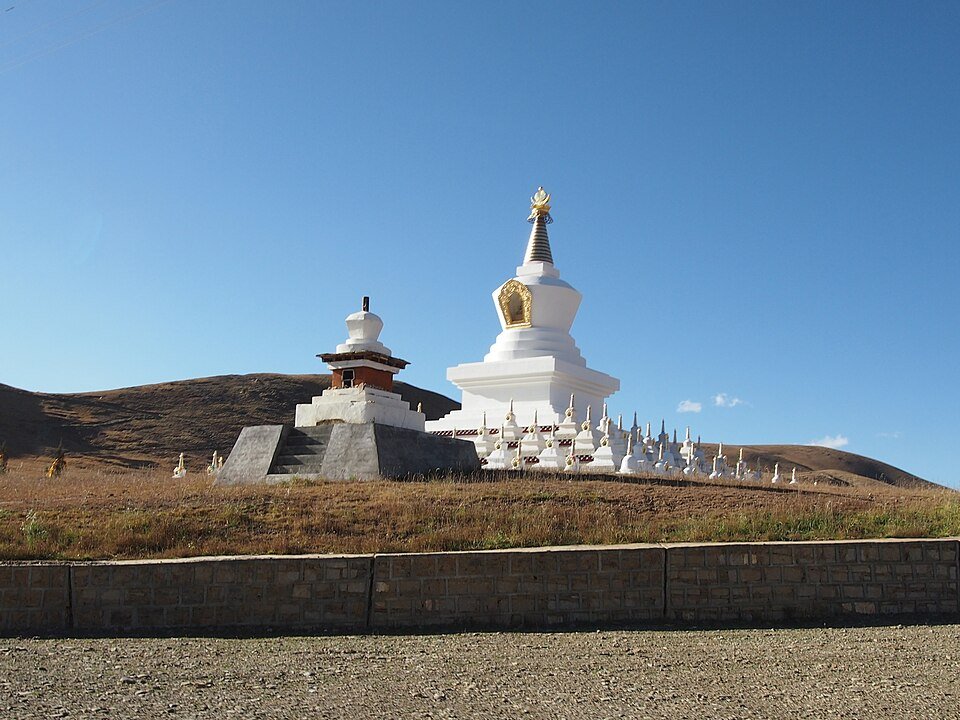
Daocheng is the gateway to Yading, with fields, grasslands and riverside scenery around the town. Time spent looking at white stupas and mountain ranges lets you feel the plateau’s air during a long journey.
Rather than focusing the entire schedule on Yading, it is also possible to rest in Daocheng and explore nearby places. For strongly seasonal landscapes such as the Red Grassland, we check colors and water levels before guiding you.
稲城亜丁Daocheng Yading
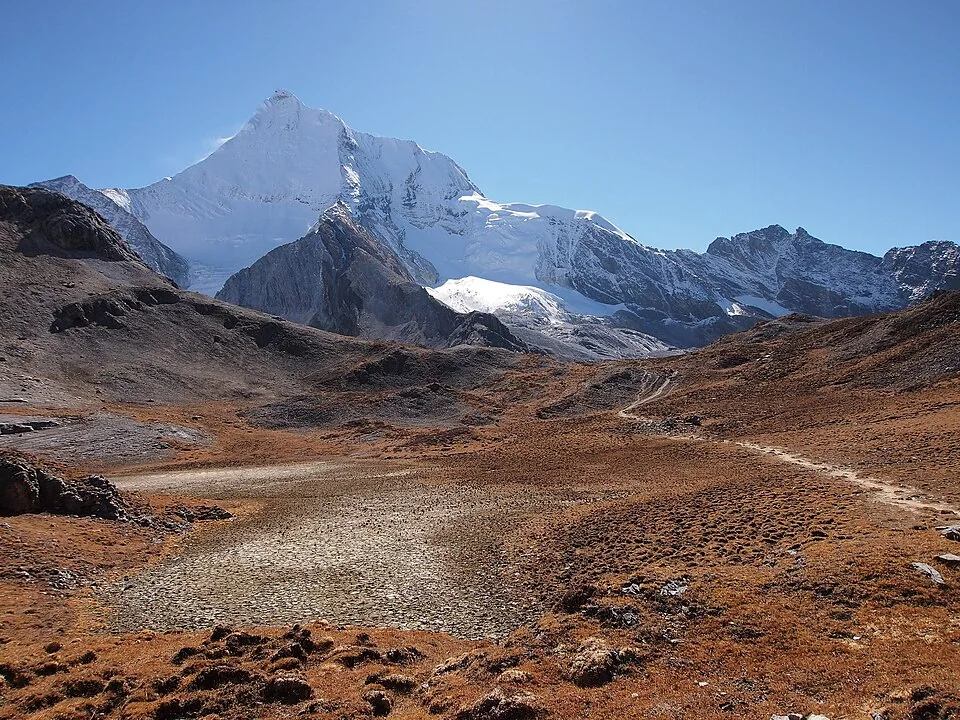
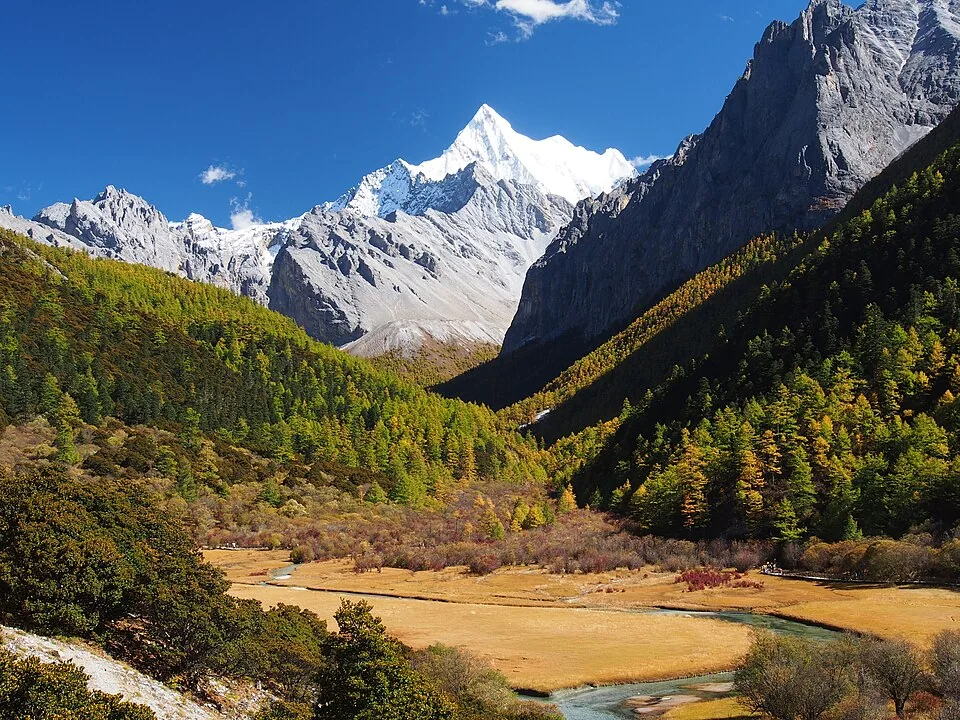
Beyond the forest, Yading opens into grasslands and snowy mountains. Centered on the three sacred peaks of Chenresig, Jampelyang and Chana Dorje, it is a mountain region where nature and pilgrimage culture meet.
We select places such as Chonggu Monastery and Luorong Pasture according to open areas and your fitness. High-altitude walks toward Milk Lake and Five-Color Lake are not suitable for everyone; we decide individually after checking access and physical condition.
央邁勇Jampayang · Yangmaiyong
A sacred peak of Yading with striking, elegantly defined snowy ridgelines. Its outline changes as you walk through the valley; forests and meadows in the foreground give a richness beyond photographs isolating only the summit.
The mountain is an object of faith for local people. Enjoy views from designated paths, take no stones or plants, and preserve the place’s quiet.
Chanadorje & Chonggu Meadow
Grasslands and forests beneath Chana Dorje reveal Yading’s varied landscapes. Flowing water, seasonal flowers and clouds over the mountain show how even one valley changes from moment to moment.
Use paths and designated viewpoints rather than entering wetlands for photographs. Even when snowy peaks are hidden, we plan enough time to enjoy forests and valley scenery.
Garzê, Dergé & northern Kham’s monasteries
Garzê Monastery & Town
The monastery behind Garzê town introduces northern Kham’s religious culture. Looking over the town and surrounding mountains from its elevated setting reveals how monastic life has existed alongside local communities.
We check interior access on site. Combining the visit with markets and town walks, we introduce both monastic architecture and the town where people go about daily life.
徳格印経院Derge Parkhang Printing House
Dergé’s printing culture transfers characters carved in woodblocks onto paper. Preserving scriptures and printing them passes knowledge and faith to future generations. Understanding the meaning of the handwork alongside the architecture deepens a visit.
Whether work is taking place and which areas can be visited depend on the day. We do not assume permission to touch workspaces or woodblocks, and follow staff guidance on photography.
Yilhun Lhatso
A lake at the foot of Chola Mountain, surrounded by forest and rocky peaks. Blue-green water and the light of snowy mountains make it a quiet place to experience plateau nature en route to Dergé.
Prayer stones and flags by the lake are tied to local faith. Leave them in place, and enjoy walks and photography from designated areas.
Palpung Monastery
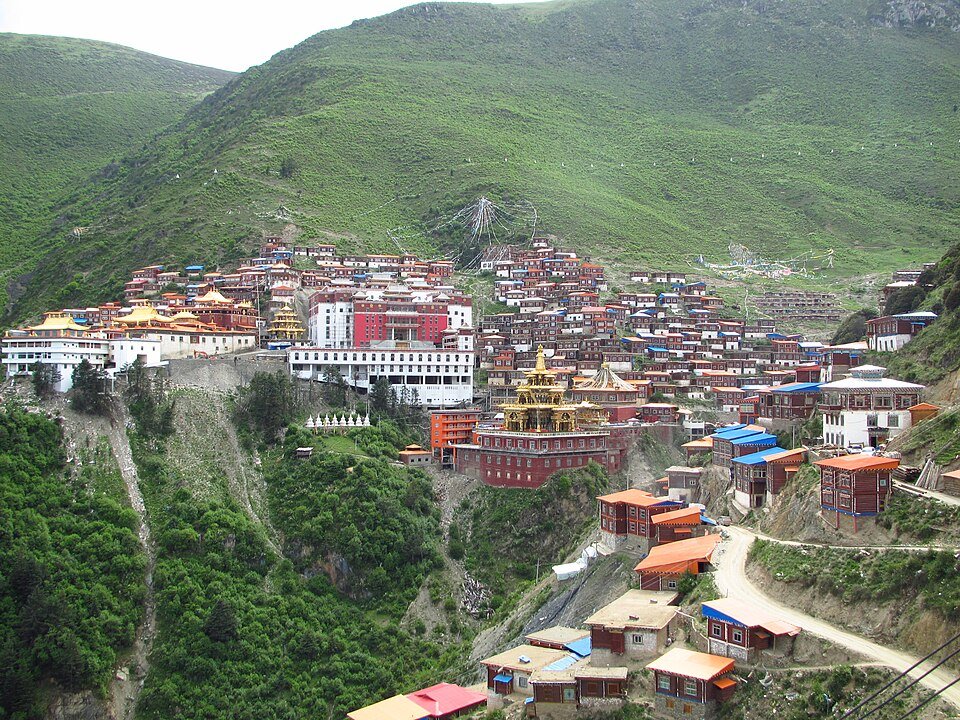
Palpung Monastery’s halls layer across a mountainside, making it an important center of Buddhist culture in the Dergé region. Seen together with surrounding villages and mountains, the monastery becomes part of the land’s landscape.
We allow enough time for winding mountain roads and visit open halls quietly. For those interested in art or the history of Buddhist traditions, the local guide explains the background.
Palyul Monastery
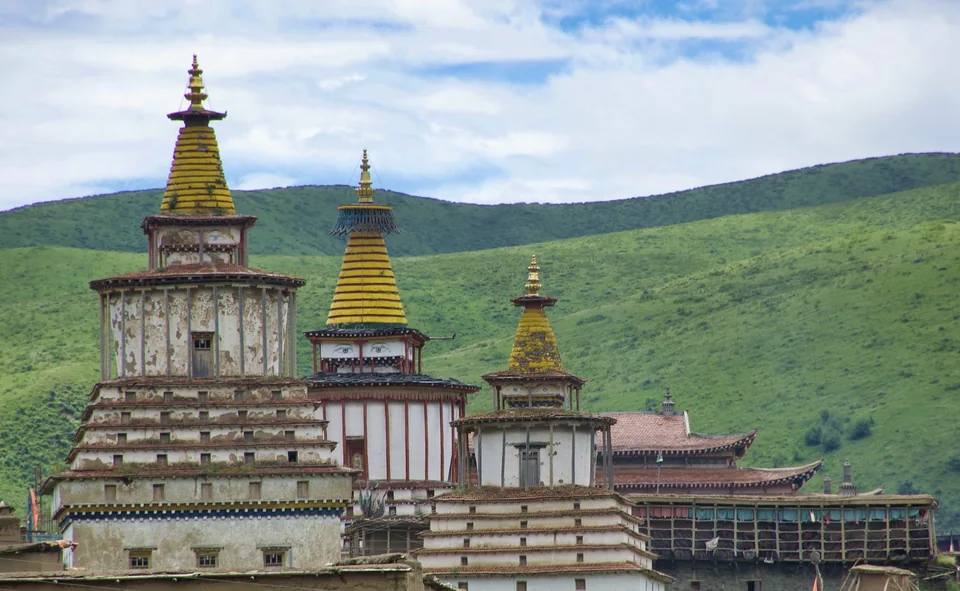
Baiyu town and the monastery spreading across the mountainside. As a regional center preserving the Nyingma tradition, its layered halls and scenes of prayer leave a lasting impression.
We respect monastic ceremonies and practice times, checking which places are open. Combined journeys with Dergé or Garzê require a relaxed schedule accounting for mountain-road distances.
Katok Monastery
High on a mountainside, Katok Monastery introduces the history of the Nyingma tradition in Kham. From afar, take in the halls within the broad mountainscape; inside the grounds, notice architectural details and colors.
Because of the altitude, we allow rest during both travel and sightseeing. We check access conditions for religious facilities and follow local permission when entering practice spaces.
Dzogchen Monastery
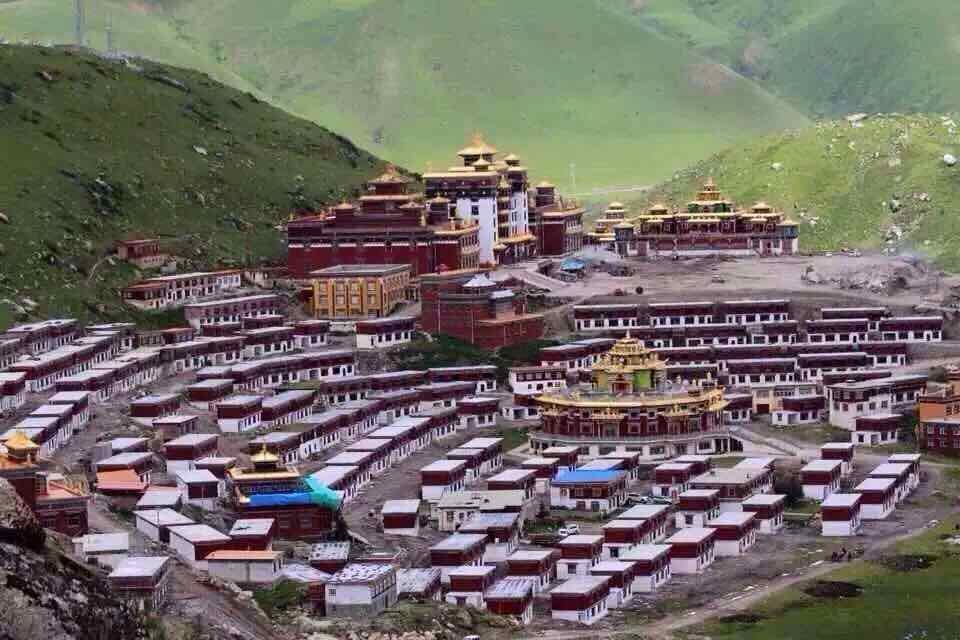
At Dzogchen, monasteries and settlements spread across a broad valley. Visiting this place of continuing Buddhist learning and practice conveys the significance of a sacred site beyond the beauty of its buildings.
We do not photograph monks or study activities without permission, and check visitor access before visiting. According to your interests, we also explain differences and connections with other northern Kham monasteries.
Aba’s lakes, mountains and culture
JiuzhaigouJiuzhaigou Valley
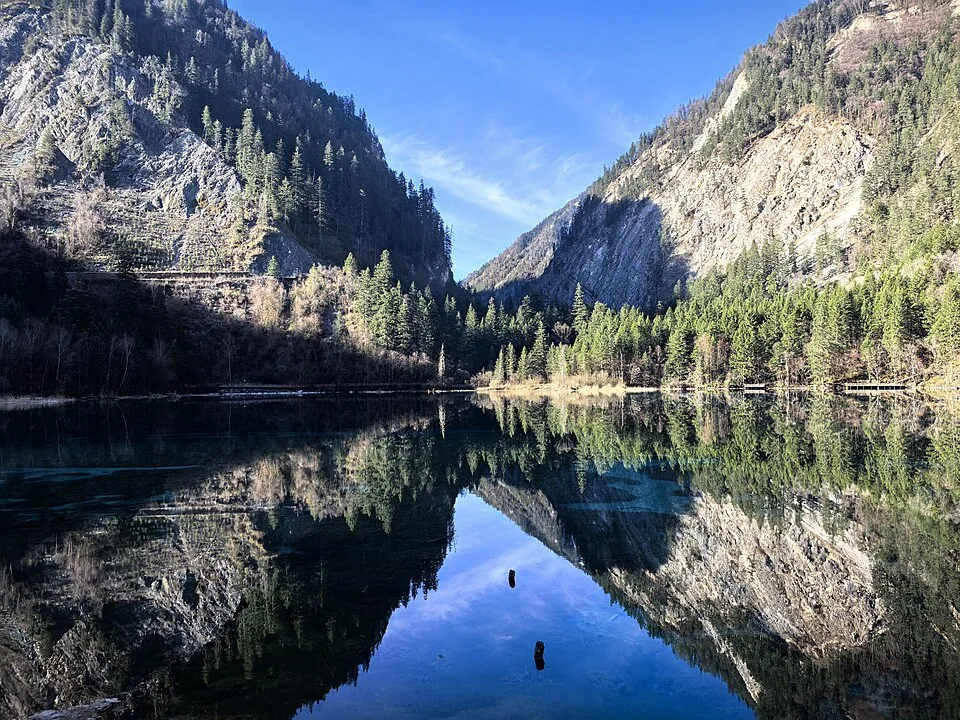
Clear lakes, terraced waterfalls and forested valleys. Jiuzhaigou is a World Natural Heritage site known for diverse landscapes shaped by water and forest. Lake colors change between sunny and cloudy days.
We follow conservation and transport rules, walking on available trails. As well as visiting the sights, we value time spent beside a single lake waiting for the light.
黄龍Huanglong Scenic Area
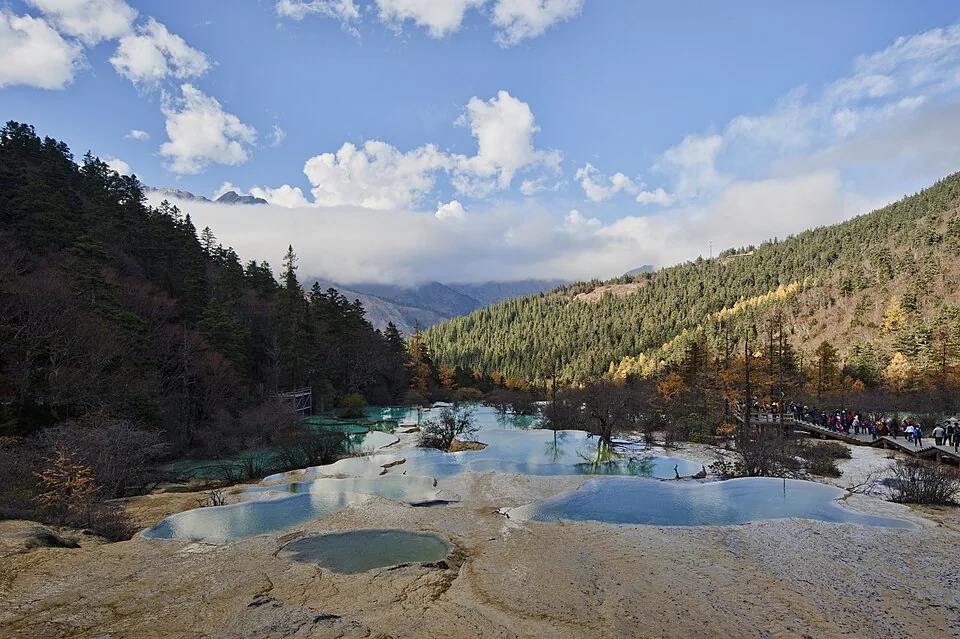
At Huanglong, colorful travertine pools descend through the mountains, edged by green forest. Landforms shaped by water over long ages reward both distant views and close attention to detail.
As the visit includes high-altitude walking, we match transport and walking distances to your condition. Pool water levels and appearance change with the season; stay on the boardwalks while viewing.
四姑娘山Mount Siguniang
At Siguniang Mountain, valleys of forest and grassland lie beneath sharp peaks. Shuangqiao, Changping and Haizi valleys each offer different terrain and walking options, allowing visits suited to your interests and fitness.
Ordinary scenic-area visits are planned separately from climbing and long-distance trekking. Even for snowy-mountain photography, we leave flexibility to enjoy valley forests and rivers according to the weather.
畢棚溝Bipenggou Valley
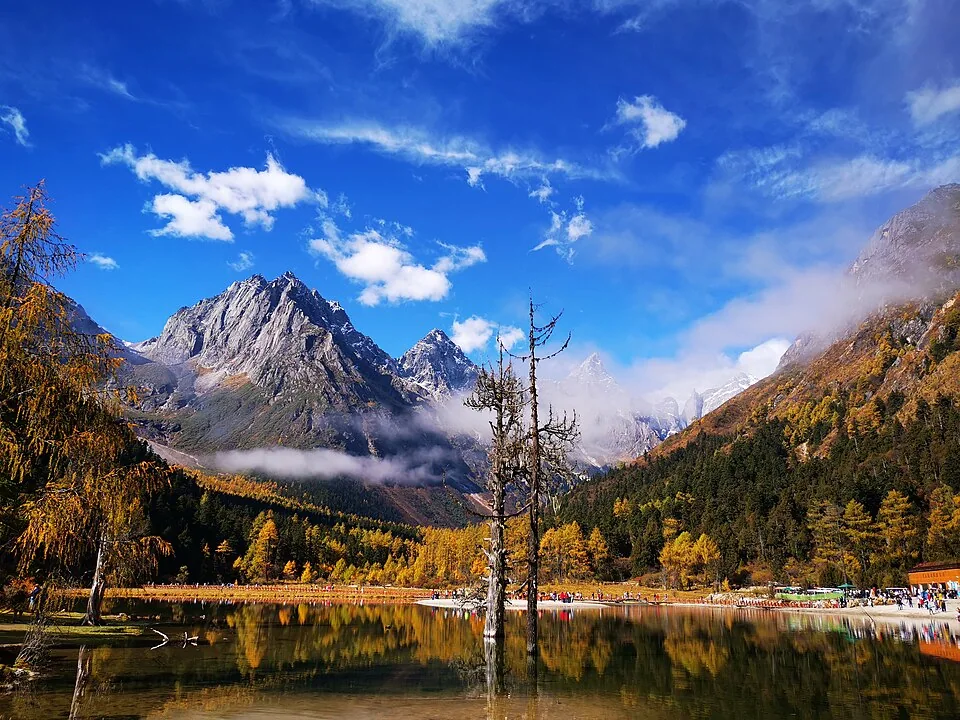
A mountain scenic area in Li County combining snowy peaks, lakes and forests. In autumn, slopes grow colorful, and reflections of trees and peaks show the changing season.
We check scenic-area transport and path availability before guiding you. As we move higher, we pay closer attention to cold and changing weather, combining photography with rest.
達古氷河Dagu Glacier
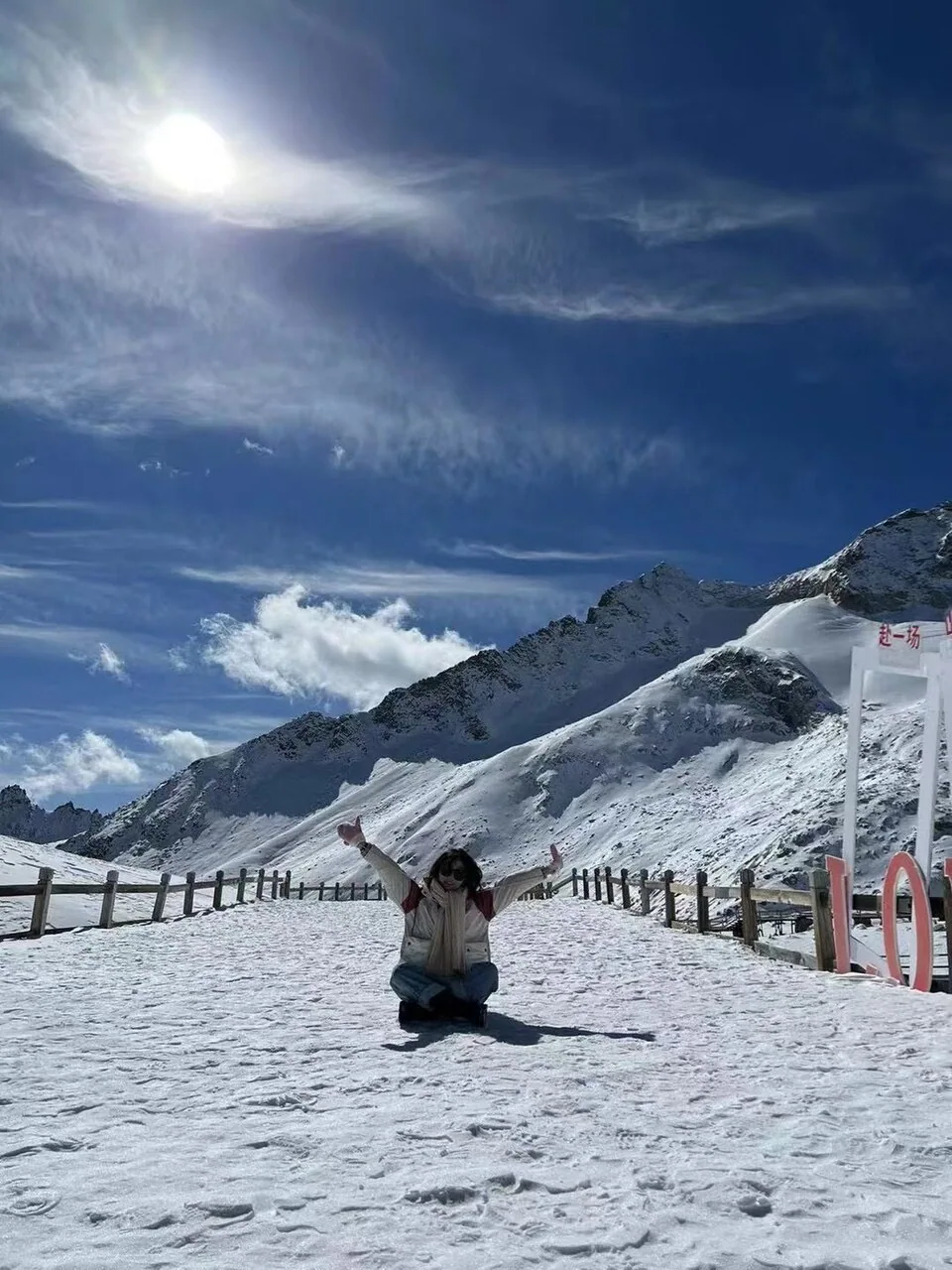
A glacier scenic area among the mountains of Heishui County. The landscape shifts from forested valleys to high snow and ice, revealing the mountain environment’s great elevation range.
Travel to high viewpoints places demands on the body. We check available transport, snow cover and your condition, planning a pace that avoids rushing into a lengthy high-altitude stay.
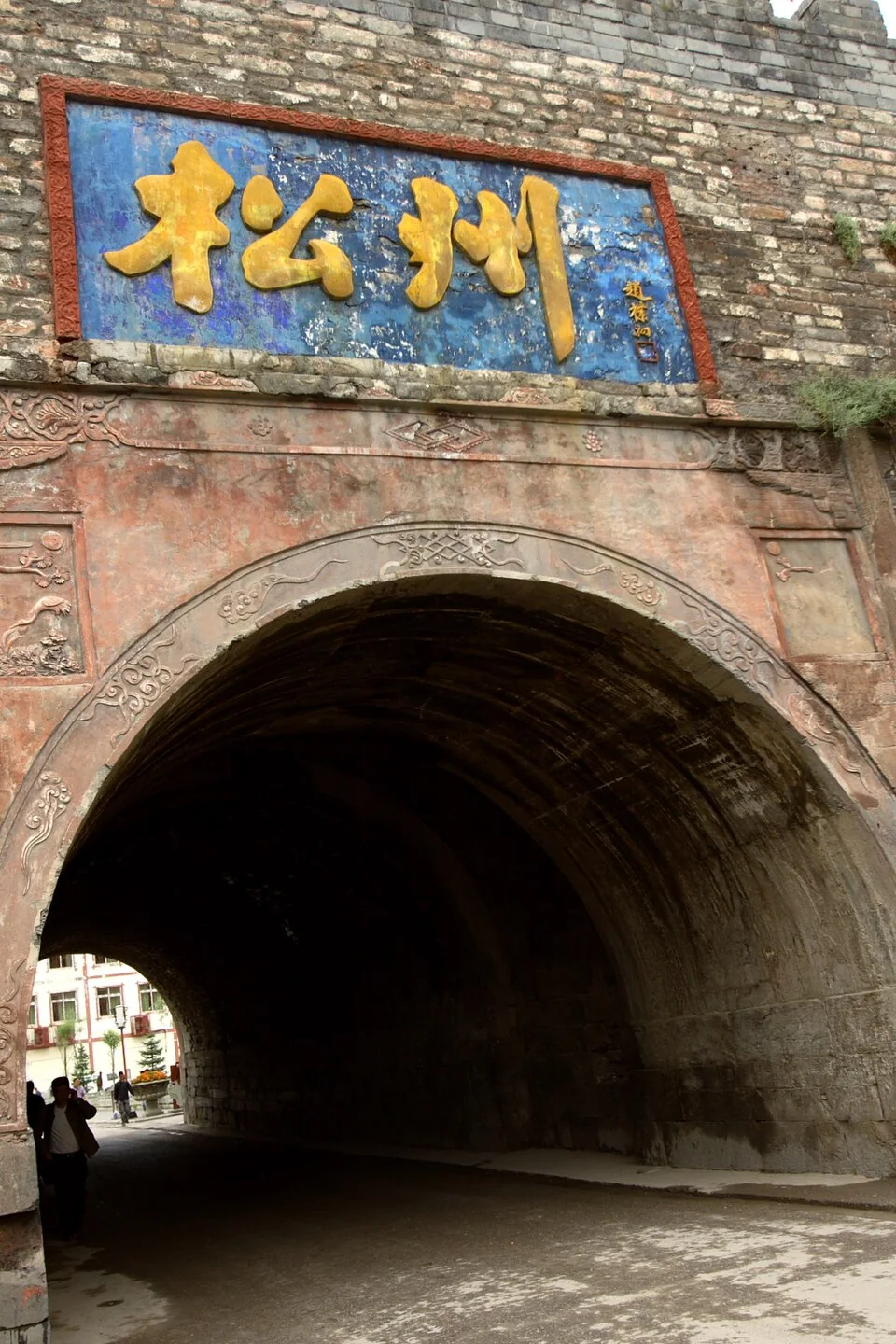
松潘古城Songpan Ancient Town
Songpan developed as a key center for mountain transport and trade. Its gates and streets reveal exchanges between Tibetan culture and neighboring regions. It can also be visited en route to Jiuzhaigou or Huanglong.
Historic elements coexist with restored and reconstructed townscapes. Walking the streets, we look beyond buildings to everyday commerce and food culture.
Aba grasslands & monasteries
若爾蓋草原Ruoergai · Zoigê Grassland
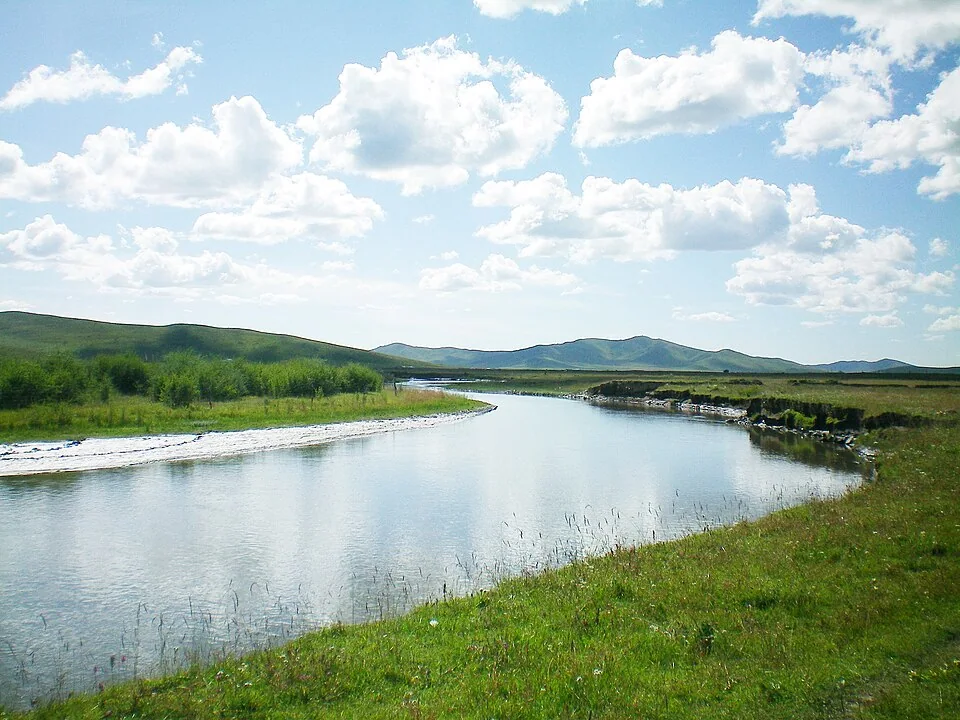
Grasslands beneath vast skies and wetlands with slow-flowing rivers. Zoigê offers an introduction to pastoral culture and plateau ecosystems together. Grass colors and birdlife change with the seasons.
Grasslands are not places for unrestricted driving. We use roads and designated routes, enjoying the scenery without disturbing grazing or wetland habitats.
花湖Huahu Wetland
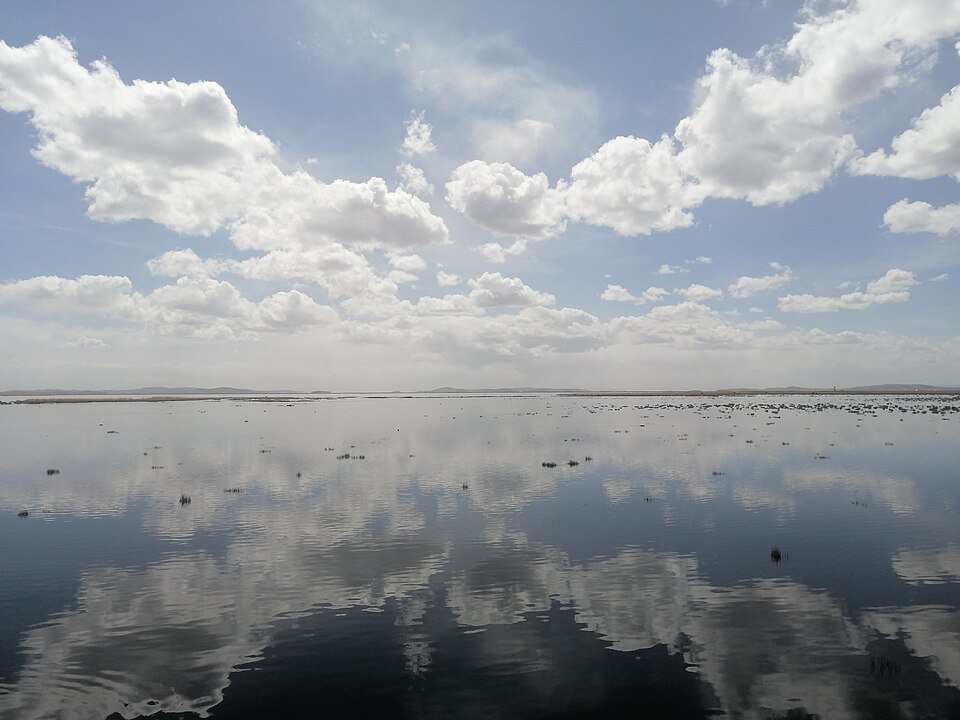
At Flower Lake, wetland waters and grasslands stretch into the distance. Boardwalks bring encounters with waterside plants and signs of birds, revealing a gentle plateau landscape different from journeys centered on snowy mountains.
Flowering times, water levels and birdwatching conditions vary each year. We observe quietly with telephoto lenses or similar equipment, keeping our distance from wildlife.
Tangke · First Bend of the Yellow River’s Nine Bends
A viewpoint over the Yellow River’s broad bend across the grassland. In evening light, the river’s winding line takes center stage, conveying the plateau’s scale.
The photograph shows scenery around Tangke. Considering viewpoint facilities and travel after sunset, we prioritize arriving in daylight and preparing warm clothing.
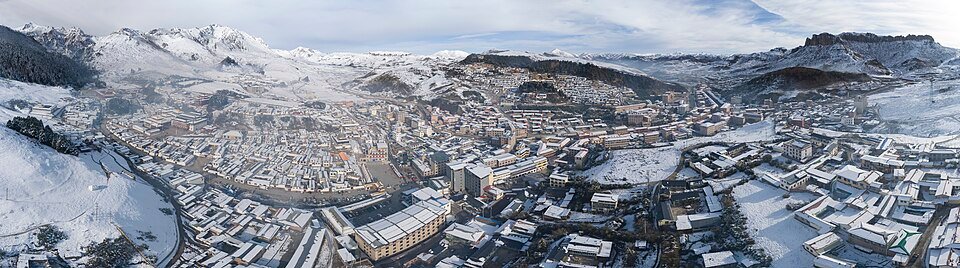
Panoramic view over Langmusi town
Langmusi · Kirti Monastery, Sichuan
Langmusi straddles Sichuan and Gansu across a small stream. At Kirti Monastery (Ge’erdi) on the Sichuan side, monastery, rocky mountains and valley scenery lie close together. We introduce it separately from the monastery on the Gansu side.
The photograph is a broad view of the town on the provincial border. We check monastery visitor access and respect local faith and daily life, without treating funeral rites as tourist spectacles.
Rangtang · Jonang Monasteries
In Rangtang, monasteries such as Tsangwa, Tsebu and Choje introduce Jonang faith and learning. Combining them with other Aba monasteries reveals the diversity of Tibetan Buddhism.
The photograph shows Tsangwa Monastery. Access to halls and religious art follows the monastery’s decisions, and visits avoid disturbing ceremonies or practice. We also plan for travel times in remote areas.
Explore further: nearby sights
Kangding, Daofu & Danba
Mugecuo (Muge Tso)
A lake and forest scenic area outside Kangding. Combined with nearby waters such as Seven-Color Lake, it offers a transition from a snowy-mountain town to forested valleys. We check internal transport and path availability before visiting.
Kangding, Daofu & Danba
Yala Mountain & Moshi Park
We choose Yala Mountain viewpoints according to weather and roads. At Moshi Park near Bamei, black rock formations contrast with grassland; visits can be combined with foothill monasteries and villages.
Kangding, Daofu & Danba
Suopo, Zhonglu & Dangling
Suopo’s watchtowers, Zhonglu’s villages and Dangling’s mountains each have distinct appeal. We respect the towers as architectural heritage and villages as places of daily life, planning high-altitude walks in Dangling separately from ordinary village visits.
Southern Kham lakes & valleys
Cuopu Valley, Sister Lakes & Tsoka Lake
Cuopu Valley and the Sister Lakes toward Batang, and Tsoka Lake in Xinlong, offer forest, grassland and waterside landscapes. They lie far apart, so we choose routes rather than group them as a short day’s circuit. At Tsoka Lake, we also respect the monastery’s sacred space.
Northern Kham culture
Dzongsar, Shechen & monasteries of Sershul
Northern Kham is dotted with monasteries preserving traditions of Buddhist schools, scholarship and art. We check access and roads, introducing regional Buddhist culture beyond the printing house alone. At Sershul’s Bage Mani Wall and Songge Mani Stone City, we view from protected visitor areas without moving prayer stones.
Aba villages & valleys
Taoping Qiang Village, Zhuokeji & Guanyinqiao
Taoping Qiang Village introduces Qiang culture and stone architecture, and we distinguish it from Tibetan villages. At Zhuokeji in Barkam, discover Gyalrong history and architecture; at Guanyinqiao in Jinchuan, explore local monasteries and valley scenery.
Nature in Aba
Lianbaoyeze, Songping Valley, Naizi Valley & Kalong Valley
Enjoy rocky peaks and lakes at Lianbaoyeze in Aba County, waters and forests at Songping Valley in Mao County, and seasonal colors and valley scenery at Naizi and Kalong valleys in Heishui. We treat Lianbaoyeze as a separate visitor area from Nianbaoyuze in Qinghai and check access conditions individually.
More on monastery culture
Aba Kirti Monastery, Seda & Yarchen
Aba’s Kirti Monastery and Kirti Monastery on Langmusi’s Sichuan side are separate places sharing a name. Larung Gar in Seda and the religious settlement of Yarchen may restrict foreign travelers’ visits or entry. We do not guarantee them as generally accessible tourist sites, and distinguish cultural background from the possibility of visiting.
Discover the land’s stories beyond the scenery.
Snowland Travel is a Tibetan-run local travel company. Alongside the beauty of famous sights, we value prayer, architecture, language and people’s daily lives. Tell us in Japanese about monasteries or regions that interest you, or your photography themes.
We check the season, roads, facility openings and conditions for receiving foreign nationals, then combine places that can be visited.
Prices are reference amounts per person, not confirmed departures or availability. Request a quotation for your dates, party size, stays and included services.